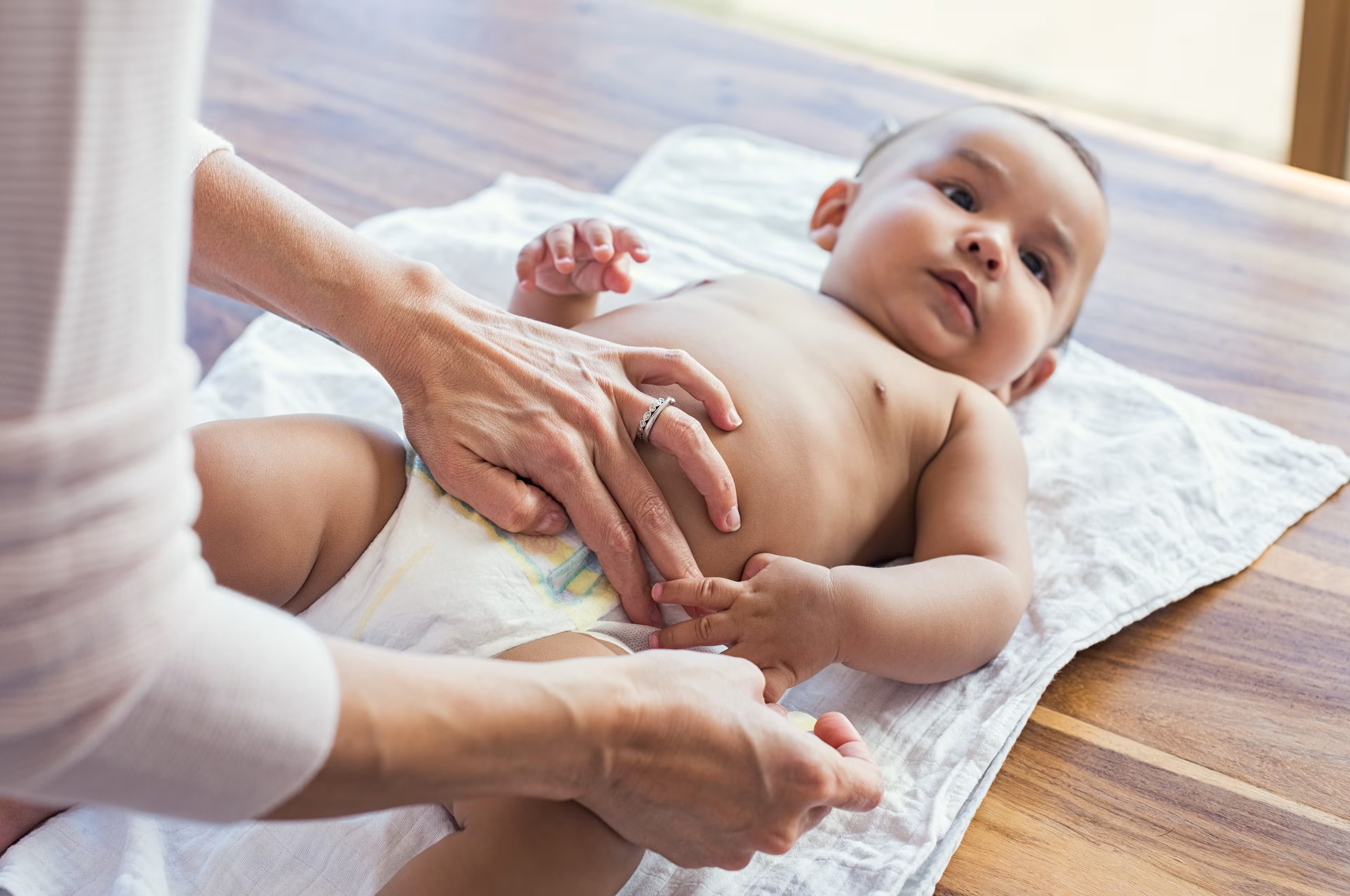
Pampers Nappy Size Guide and Chart


Key Takeaways
Wondering what size nappies to buy for your newborn or what nappy will fit your older baby's ever-changing size? Check out our Pampers Nappy Size Guide below. It includes a helpful chart to determine the appropriate size, tips on checking if the nappy fits properly, and guidance on when to switch to a larger size.
Additionally, you'll find information on the best nappy size and type for your baby, along with tips to help prevent leaks and poonamis. You'll also find guidance on the best nappies for crawling, walking, and on-the-go babies - including how to choose a nappy that stays in place during active play.
Pampers Nappy Size Guide
Understanding nappy sizes can simplify the decision-making process for parents. While many wonder which nappy size corresponds to their child's age, age is not the most reliable guide. After analysing hundreds of thousands of nappy-fit measurements, Pampers has concluded that weight is the most dependable factor to consider when selecting the appropriate nappy size.
As you explore the Pampers nappy size chart and guide below, remember that your newborn's or older baby's weight plays the most crucial role in determining the best fit.
To make things easier, we've also addressed the common question of whether you should buy a specific number of nappies in each size or not. Babies grow at their own pace, so it's often best to wait and see before stocking up on a particular size. For general planning, we've included the average number of nappies a baby usually uses in each size on our chart.
Picking the Best Pampers Nappy Size by Weight
To help you decide which nappy and size is best for your baby at each stage of development, use our useful nappy size chart.
Our nappy sizing guide and chart lets you know the average number of nappies you can expect to use each day and what nappies are available in each size. It's a great tool for planning or ordering ahead!

*Can vary by baby, age, and individual habits and practice
How to Use the Nappy Size Chart
Weight ranges. The chart is primarily based on nappy sizes by weight to ensure a snug and comfortable fit for your baby. You can determine your baby's weight at home or during a GP or health visitor visit. For example, a size 1 nappy's weight range is for a baby between 2 and 5kg (4-11lbs), whereas a size 2 nappy's weight range is between 4 and 8kg (9-18lbs). Similarly, the size 4 nappy weight range is ideal for babies weighing 9 to 14kg (20-31lbs), and size 5 nappy weight is typically for babies that are 11 to 16kg (24-35lbs).
Number of nappies per day. This is an average, and your baby's needs might vary.
Nappy types. The chart also lists the Pampers nappy types and what size each is available in. Depending on your baby's needs, whether it's for a newborn or needing extra leak protection for your active baby, you can choose the best option for you and your little one.
Some weight ranges overlap, so it's helpful to monitor your baby's fit to know when to switch sizes. Keep reading to learn more about finding the perfect fit, when to size up in nappies, and which Pampers nappy is best for your baby's needs. Plus, learn tips on how to prevent leaks and 'poonamis' to ensure a more pleasant and comfortable nappy experience.
Newborn Nappies
When caring for your newborn, choosing the right nappy is essential for keeping their delicate skin comfortable and dry. Pampers newborn nappy sizes include Size 0 (<3kg), Size 1 (2-5kg) and Size 2 (4-8kg), depending on your newborn's weight. They're designed with a navel-friendly shape to protect the umbilical cord stump, ultra soft materials, and instant absorption to protect skin and protect against leaks.
Newborns tend to go through a lot of nappies – often up to 10 per day – which means it's a good idea to have a healthy supply to hand.
As your baby grows, it's important to monitor their weight to help you decide when to transition from a newborn nappy size to the next size up. Newborns often move quickly between the newborn sizes as they gain weight.
For more guidance on umbilical cord care or if you're wondering how many newborn nappies you'll need, you can read our articles to help you get started or prepare for your baby's arrival.
When to Change Nappy Sizes
Beyond your baby reaching a weight that's over what's recommended for their current nappy size, here are some signs your baby might be ready for a different size nappy:
What’s in Your Nappy Bag? Take our Poll!
What are your nappy bag must-haves? From essentials to just-in-case extras, every parent packs a little differently. Take our fun quiz to see how your nappy bag stacks up against other Pampers Parents.
Instant Results
Enjoyment Guaranteed
Personal Insights
How can I tell if a nappy fits my baby properly without being too tight or too loose?
Here's how to check whether your baby's nappy fits properly - whether they're a newborn lying still or a baby who's always on the move. Because babies come in all shapes and sizes, Pampers nappy sizes are based on weight rather than age or gender. Most of the time your baby's weight will fall neatly within a single size, but when weight ranges overlap you may have a choice between two - and a long, slim baby may fit best in the smaller option even at the upper end of the range.
Run through these five quick checks after every change:
Signs the fit is wrong

Which Pampers Nappy Is Best for Your Baby?
The best-fitting Pampers nappy depends on your baby's stage, weight, and how active they are. As your baby grows, their nappy needs will change, which is why not all nappy types are available in every size - nappy types designed for more active babies, like nappy pants, typically start at Size 3 or Size 4.
Here are some things to consider when choosing which Pampers nappy to buy:
For Newborns
Newborns have very delicate skin, so they generally require extra softness and protection. Pampers newborn nappies are:
Consider Pampers® Premium Protection New Baby at this stage. It's the only newborn nappy approved by the British Skin Foundation.

If you’re wondering what size nappies to take to the hospital or birthing centre in your hospital bag, keep in mind that a newborn baby doesn’t necessarily need a Size 0 nappy. Depending on your baby’s birth weight, a larger size may be the best fit, so take a few of each of the smaller sizes of newborn nappies to try.
For Growing Babies
Ensuring your baby feels dry and comfortable will be your biggest priority as they become more active. For growing babies, choose a nappy that's:
Pampers Premium Protection nappies could be an ideal choice for your growing baby, or you might enjoy the easy on-and-off feature of Pampers Baby-Dry nappy pants for your wriggly baby.


What Nappies Are Best for Active Babies?
For active babies who crawl, cruise, and won't stay still, nappy pants tend to offer the best combination of fit and freedom. The 360° elasticated waistband moves with your baby as they twist, reach, and pull up to stand, and because they pull on like underwear, changes can be done standing up - no wrestling on the changing mat and no tapes to re-fasten mid-wriggle. Pampers Baby-Dry Nappy Pants are designed for up to 12-hour dryness, making them a strong choice for long days and overnight wear. Pampers Premium Protection Nappy Pants offer extra softness for delicate skin alongside the same pull-up convenience. Explore the range of nappies for crawling babies and nappies for walking babies to match the right style to your little one's stage.

Which nappies stay in place and move with babies who crawl, walk, and run?
Nappy pants are the style most likely to stay in place on babies who crawl, walk, and run, because they're designed to move with the body rather than sit still on it. A nappy that fitted perfectly a few weeks ago can suddenly start to shift, sag, or leak once your little one is pulling to stand, crawling at speed, or rolling through the night - and that isn't always a sizing problem. Very often, it's simply time for a different style.
Why regular nappies can shift on active babies
Tab-fastening nappies are designed for a baby who is lying down. Once your baby is upright and in constant motion, the tabs can loosen with repeated stretching and pulling, the back waistband can sag as they crawl or squat, and the leg cuffs can gape at the sides. The absorbency may still be spot-on - it's the fit style that no longer matches your baby's stage.
What to look for in a nappy for an active baby
Scenarios and solutions
Browse the range of nappies for crawling babies to find the style best suited to your little one's stage.
Why the Right Size Matters
When your little one wears the correct nappy size, good things happen! A properly fitting nappy not only keeps your baby dry and comfortable, but also helps prevent common nappy issues like leaks and 'poonamis'.
Here's what could happen if your little one isn't wearing the correct nappy size:
How to Prevent Leaks and 'Poonamis'
Do the following to help prevent nappy leaks and 'poonamis':
If you've done all this and checked you've got the right nappy size, it could be time to choose a more absorbent nappy, like Pampers Baby-Dry.
Get more tips on how to change a nappy and how often your little one needs changing in our informative guides.
FAQS AT A GLANCE
Pampers nappies and nappy pants range from Size 0 up to Size 9. Check out the nappy size guide and chart by weight included in our article to discover what sizes are available for each nappy type. As an example, Pampers Premium Protection nappies are available in the following sizes:
• Size 4: 9-14kg (20-31lbs)
• Size 5: 11-16kg (24-35lbs)
• Size 6: 13-18kg (29-40lbs)
• Size 7: 15+kg (33+lbs).
The Bottom Line
Once you find the best size nappy for your little one using our Pampers nappy size guide and chart for newborns and older babies, choosing the right nappy and nappy pants will be a breeze.
With a snug-fitting nappy, your baby or toddler will be comfier, experience fewer leaks and possible ‘poonamis’, and you’ll be able to relax in the knowledge that your baby’s skin is getting all the protection it needs.
If you want to track your baby’s growth, you might enjoy our Baby Growth Chart Calculator tool.
If you haven’t already, download the Pampers Club app, which offers discounts and rewards on all your favourite Pampers products – helping you to care for your little one’s nappy area.
How We Wrote This Article
The information in this article is based on expert advice found in trusted medical and government sources, such as the National Health Service (NHS). You can find a full list of sources used for this article below. The content on this page should not replace professional medical advice. Always consult medical professionals for full diagnosis and treatment.
Read more about Safety and Commitment
Nappy leaks: Prevent Leaks and blowouts by ensuring the right nappy fit
Learn how we have specifically designed Pampers nappies to reduce the chances of leaks and catastrophes for babies of all ages. See why mums trust Pampers.
Read moreWhy Pampers Nappies & Baby Wipes are the Best Nappy Change Duo
Baby wipes give your baby’s bottom a thorough clean after being exposed to wetness. Learn more about them and why Pampers products are the best choice.
Read moreNappy leaks: Prevent Leaks and blowouts by ensuring the right nappy fit
Learn how we have specifically designed Pampers nappies to reduce the chances of leaks and catastrophes for babies of all ages. See why mums trust Pampers.
Read moreWhy Pampers Nappies & Baby Wipes are the Best Nappy Change Duo
Baby wipes give your baby’s bottom a thorough clean after being exposed to wetness. Learn more about them and why Pampers products are the best choice.
Read moreNappy leaks: Prevent Leaks and blowouts by ensuring the right nappy fit
Learn how we have specifically designed Pampers nappies to reduce the chances of leaks and catastrophes for babies of all ages. See why mums trust Pampers.
Read moreWhy Pampers Nappies & Baby Wipes are the Best Nappy Change Duo
Baby wipes give your baby’s bottom a thorough clean after being exposed to wetness. Learn more about them and why Pampers products are the best choice.
Read moreJoin Pampers Club and get:
- PAMPERS COUPONS
- TOOLS & QUIZZES
- PARENTING TIPS
 PAMPERS COUPONS
 TOOLS & QUIZZES
 PARENTING TIPS