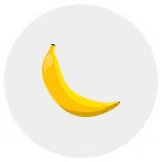
21 Weeks Pregnant
Your baby is the size of a
You're now 21 weeks pregnant, and your baby is growing rapidly. At this stage, your little one is developing their sleep-wake cycle and can even hear your voice. As you navigate through the second trimester, there are many exciting changes happening both inside and outside of your body. In this article, we'll explore what happens during week 21 of your pregnancy, including your baby's development, common symptoms, and tips for staying healthy and comfortable with your growing bump.

Highlights at 21 Weeks Pregnant
Before we get into more detail about 21 weeks pregnant, take a look at the highlights below:
BABY NAME GENERATOR TOOL

Baby name generator
By gender:
By theme:
Your Baby’s Development at 21 Weeks Pregnant
It’s ‘all systems grow’ inside your bump at 21 weeks pregnant. Here are some developments taking place:
How Many Months Is 21 Weeks Pregnant?
Now that you're at 21 weeks pregnant, what is that in months? There are different ways to assign the weeks of pregnancy to months, but based on one common way of estimating the months of pregnancy, you’re in your fifth month.
What Size Is a Baby at 21 Weeks Pregnant?
Now that you’re 21 weeks pregnant your foetus is about the size of a banana, measuring close to 26.7 centimetres head to toe, and weighing in at around 350 grams.
Your Baby: What Does 21 Weeks Pregnant Look Like?
This illustration can help you envisage what your little one may look like inside your pregnancy bump at 21 weeks:

Your Body at 21 Weeks Pregnant
Around this time, your uterus is starting to grow more rapidly, and your appetite may be growing too. This can make it harder to resist some of those cravings you might be experiencing. It’s OK to give in to some of your cravings for chocolate and ice cream from time to time, but overall aim to keep to a healthy, balanced diet of nutritious foods like fruits and vegetables, protein, dairy and wholegrains.
While we’re on the topic of food, check out what foods to avoid during pregnancy as there may be some foods that are no longer on the menu for the last few months of your pregnancy.
You may have had some heartburn and indigestion earlier in the first trimester, which was mainly due to hormonal changes. Now, as your uterus grows it may start pushing up against your stomach. This can cause bouts of indigestion or heartburn, and these may become more frequent as your pregnancy progresses.
Reduce the likelihood of indigestion and heartburn by eating small amounts more frequently, instead of three or four big meals a day. Also, cut down on caffeine-based drinks and rich, spicy or fatty foods. If possible, try not to eat in the three hours before bedtime.
Other things that can make indigestion worse like smoking or drinking alcohol are not recommended during pregnancy at all, because they can harm your foetus. Even passive smoking is known to cause complications. Talk to your midwife or GP if you’re worried about any of these issues.
Your Symptoms at 21 Weeks Pregnant
Here are some of the symptoms you may be experiencing at 21 weeks pregnant:
What Size Is a Pregnant Belly at 21 Weeks?
Every pregnancy (and bump) is different, but at 21 weeks pregnant, it’s not unusual for your belly bump to be more noticeable. Your baby and uterus continue to grow, and your uterus may also be pushing up against your stomach as it expands, which can cause indigestion and heartburn (as we mentioned in the section above).
If you haven’t felt your baby’s first movements just yet, keep an eye out in the next couple of weeks, as these movements are usually felt for the first time between 16 and 24 weeks of pregnancy. For now, you may only feel a fluttering or bubbling sensation in your belly, but in the coming weeks, those foetal movements will become stronger. Prepare to feel some little jabs and kicks.
What Does 21 Weeks Pregnant Look Like?
For a better idea of what your belly might look like around 21 weeks pregnant, check out the image below.

Things to Consider at 21 Weeks Pregnant
Here are some helpful things to consider at 21 weeks pregnant and as your pregnancy progresses:
Be open to different ways of being intimate with your pregnant partner. Many aspects of pregnancy, such as weight gain, hormonal changes, and worries about what may lie ahead with labour and childbirth, may lower your partner’s desire to have sex – and that’s normal. Take note of their mood and find other ways to express intimacy besides sex, from holding hands to kissing, cuddling, and touching. For most normal pregnancies, it’s OK to continue having sex, if both partners are up for it; just check with your GP first.
Questions For Your Doctor at 21 Weeks Pregnant
If you have any questions or concerns at 21 weeks pregnant or any time during your pregnancy, your GP or midwife is always there to guide you along the way. Here are some common questions at 21 weeks:
FAQS AT A GLANCE
Although there are various methods of dividing the 40 weeks of pregnancy into months, at 21 weeks pregnant you’re likely still 5 months pregnant. In the next week or 2, you’ll enter your sixth month.
21 Weeks Pregnant: Your Checklist
As you hit the halfway point in your pregnancy, consider some of the following to-dos:
□ Get a footrest to elevate your feet slightly whenever you sit. This is a great way of relieving slight swelling.
□ Ask your midwife or GP if you qualify for free vitamins and food vouchers under the Healthy Start Scheme, and ask how to apply.
□ If your friends or family are throwing you a baby shower, get your baby registry sorted so that it’s ready by the time the invites are sent out.
□ Keep on researching those names. If you’re 21 weeks pregnant with a girl, check out some of these top baby girl names. Looking for a boys’ name? Get some inspiration from our list of popular baby boy names. If you don’t know your little one’s gender yet, you might want to add some of these gender-neutral baby names to your shortlist.
21 weeks pregnant - checklist
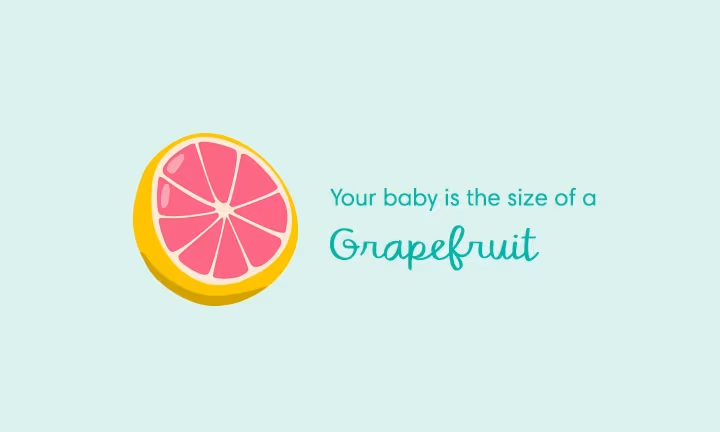
15 Weeks Pregnant
At 15 weeks pregnant, you may be experiencing an energy boost. Read up on what else is happening at 15 weeks, both inside and out.
Read more
18 Weeks Pregnant
Discover exciting milestones and changes during the 18th week of pregnancy. Track baby development and understand pregnancy in terms of months.
Read more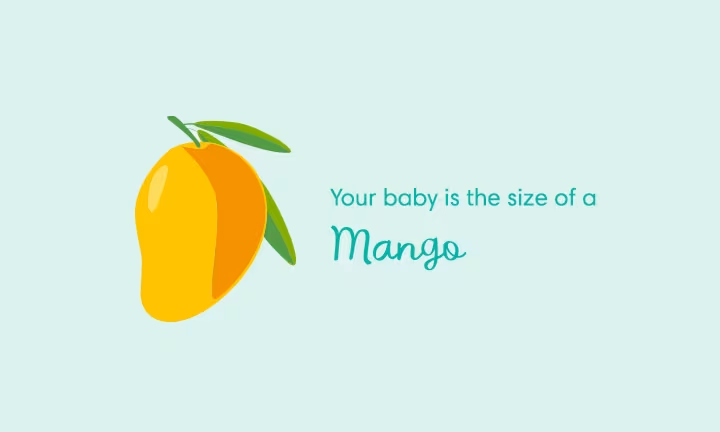
19 Weeks Pregnant
At 19 weeks pregnant, your baby is about the size of a mango. Learn about your baby's development, common symptoms like constipation, and other prenatal care tips.
Read more
22 Weeks Pregnant
Navigate the journey of being 22 weeks pregnant. Discover the fascinating growth and changes, from size comparisons to key developmental milestones.
Read more
11 weeks pregnant
Explore the journey of your baby’s development and changes you’ll feel at 11 weeks pregnant. Symptoms to expect during week 11 of your pregnancy.
Read more
10 Weeks Pregnant
Being 10 weeks pregnant brings about unique changes. Get comprehensive insights about your baby's movement and the typical symptoms to expect.
Read more
12 weeks pregnant
At 12 weeks pregnant you’ve reached the end of the first trimester! Discover the highlights of foetal development at 12 weeks.
Read more
14 Weeks Pregnant
Learn what happens at 14 weeks of pregnancy. From the size of your bump to your baby's development, guide you through all changes you can expect.
Read more
13 Weeks Pregnant
At 13 weeks pregnant, you have made it to the second trimester. Some pregnancy symptoms may start to ease while others may get stronger. Learn more here.
Read more
16 Weeks Pregnant
Discover what to expect from your pregnancy at 16 weeks. Learn about the development stages of your baby, and tips on how to sleep comfortably.
Read more15 Weeks Pregnant
At 15 weeks pregnant, you may be experiencing an energy boost. Read up on what else is happening at 15 weeks, both inside and out.
Read more18 Weeks Pregnant
Discover exciting milestones and changes during the 18th week of pregnancy. Track baby development and understand pregnancy in terms of months.
Read more19 Weeks Pregnant
At 19 weeks pregnant, your baby is about the size of a mango. Learn about your baby's development, common symptoms like constipation, and other prenatal care tips.
Read more22 Weeks Pregnant
Navigate the journey of being 22 weeks pregnant. Discover the fascinating growth and changes, from size comparisons to key developmental milestones.
Read more11 weeks pregnant
Explore the journey of your baby’s development and changes you’ll feel at 11 weeks pregnant. Symptoms to expect during week 11 of your pregnancy.
Read more10 Weeks Pregnant
Being 10 weeks pregnant brings about unique changes. Get comprehensive insights about your baby's movement and the typical symptoms to expect.
Read more12 weeks pregnant
At 12 weeks pregnant you’ve reached the end of the first trimester! Discover the highlights of foetal development at 12 weeks.
Read more14 Weeks Pregnant
Learn what happens at 14 weeks of pregnancy. From the size of your bump to your baby's development, guide you through all changes you can expect.
Read more