Baby holding an adult’s finger

Pampers Products Backed by Experts

3 min readUpdated May 18, 2026

As we believe babies deserve our best, we’ve always prioritized babies’ safety and skin health in all of our nappy and wipe products. Our researchers work with internal and external experts to integrate the latest safety standards used around the world.

Key takeaways:

  • Pampers has safe for skin or skin friendly products recognized by trustworthy organizations

  • Scientific research helps guide the safety and skin compatibility evaluation of Pampers products. We have over 125 published scientific studies and presentations, from exploring science behind babies’ development to clinical studies that show how Pampers products are superior in performance, quality, and safety.

  • Pampers nappies and wipes are dermatologically tested by Dermatest and accredited by dermatologists of the Skin Health Alliance as safe for baby skin. UK: approved by the British Skin Foundation. 

  • Our nappies and unscented wipes are tested for over 1,000 controversial substances and certified according to OEKO-TEX STANDARD-100.

Safe Products Recognized Globally By Trustworthy Organizations

Safety is an everyday Pampers promise as we believe babies deserve our best.

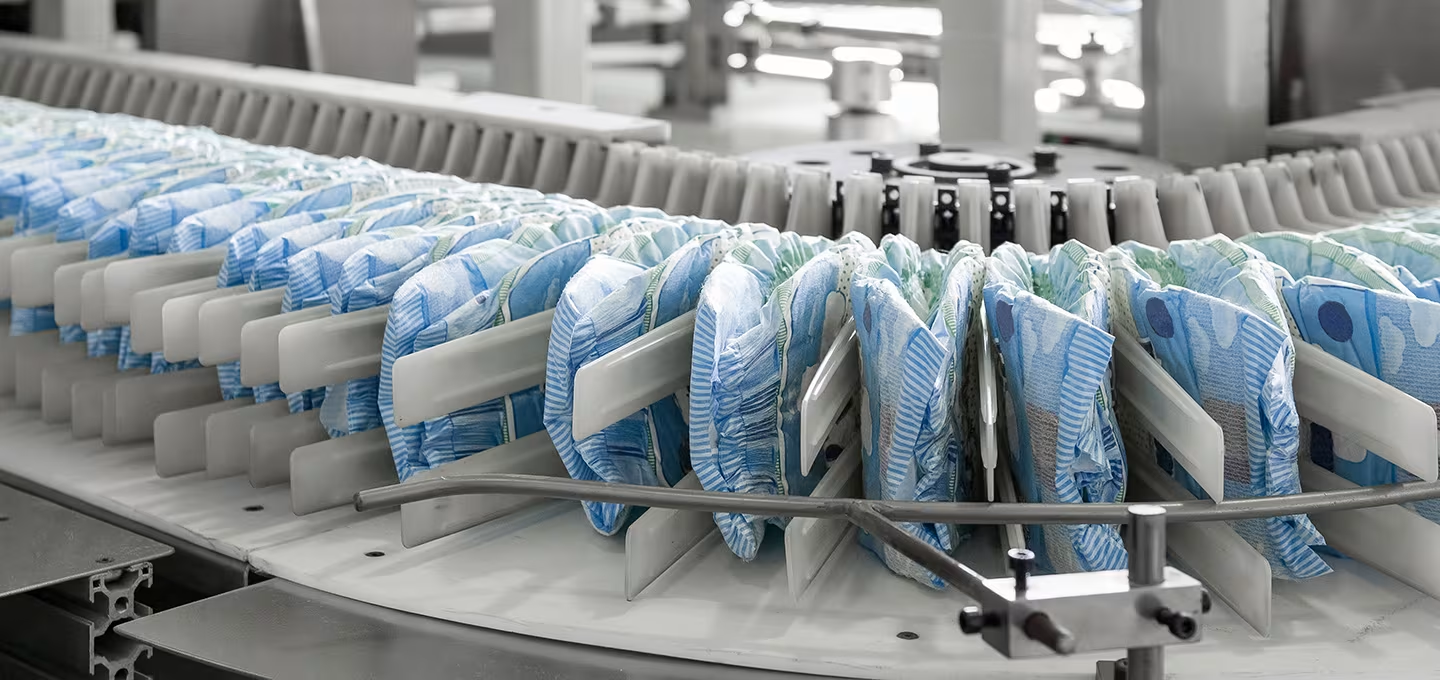
That is why we carefully evaluate the safety of all our materials, manufacturing processes and final products before they go to market to create high quality and safe products that parents can use with confidence. These evaluations are a mandatory part of our product development process and robust quality approach to maintain safety through the entire lifecycle of the product: from design to manufacturing to after sales services. Our product evaluation process meets the principles outlined in the notes of guidance of the European Commission´s Scientific Committee on Consumer Safety (SCCS), and the World Health Organization (WHO).

We also work with independent third parties. Pampers’ nappies & unscented wipes and plants in Europe are independently tested and certified to Standard 100 by OEKO-TEX®. OEKO-TEX® STANDARD 100 is a label for textiles tested for potential presence of over 1,000 controversial substances. OEKO-TEX® not only takes current legislation into account but goes even further by testing certain substances that are not yet regulated. 

But we don’t stop there. We not only test our products under supervision of external dermatologists of Dermatest® a German independent dermatological institute. 

EU: We also have independent accreditation from the Skin Health Alliance. They provide a dermatological certification for the skin safety and efficacy of Pampers nappy and wipe products. The SHA approved Pampers nappy and wipes products are proven to be safe when in contact with your baby’s delicate skin. UK: Our nappies are also approved by British Skin foundation. 

Tip

Pampers products are recognized globally for skin health and safety compliance. Check out our FAQs page for more information on safety and product ingredients.

Pampers Clinical Research and Scientific Expertise

Science and research play an important role in how Pampers designs and evaluates products. Our team of experts work with medical professionals around the world to better understand babies’ development, skin health, and sleep. Through clinical research and collaboration with scientific specialists, we continue to build knowledge that helps guide the safety, quality, and performance of Pampers products.

Our Global Scientific Team

At Pampers, we are proud to have over 290 technical and scientific staff in Europe and over 600 globally, working on Pampers product innovation, performance and safety, as well as conducting new research to understand babies’ skin and sleep. 

Key Clinical Study Highlights

We have over 125 published scientific publications and abstracts ranging from exploring the science behind babies’ development to clinical studies to design Pampers products that are safe, high quality and provide performance that parents love. Here are a few of them:

1. Helping reduce nappy rash through everyday care

Pampers scientists conducted a large international study (across US, Germany and China) to understand what helps prevent nappy rash. The research found that simple habits — like gentle cleaning, using protective products and avoiding long periods in a wet or soiled nappy — are linked to healthier skin, lower skin pH and a reduced risk of irritation.

2. How nappy design helps protect baby skin

Pampers research shows that nappy design plays an important role in skin health. By helping to absorb and separate urine and stool from the skin, well-designed nappies can reduce contact with irritants — one of the key causes of nappy rash — and help keep baby’s skin drier and more protected.

3. A nappy and wipe routine for healthier skin

Our research shows that babies using a nappy and wipe routine designed to work together — with a protective emollient and a pH-balanced wipe — had skin that was closer to its natural pH and had less exposure to the irritants in stool and urine. This routine helps support the skin barrier and protect against nappy rash throughout the day.

Importantly, this regimen was carefully evaluated for safety, confirming that it's suitable for babies’ delicate skin while delivering these skin benefits.

What OEKO-TEX® STANDARD-100 Certification Means for Your Baby

We know that ingredient safety is very important to parents. Your baby’s skin is delicate and sensitive, and you want to make sure that this precious skin is protected. That’s why Pampers nappies and unscented wipes are tested according to OEKO-TEX® STANDARD 100.

  • The STANDARD 100 by OEKO-TEX® label is one of the best-known independent certifications in the world. Products carrying this label have been scientifically tested against strict limits of controversial substances.

  • When Pampers products are tested for the OEKO-TEX® Standard 100 certification, every single component is analysed, not just the finished nappy. That means fibers, prints, elastics, adhesives, fasteners and many more are examined in OEKO-TEX® laboratories for over 1,000 controversial substances.

These include:

  • Allergens that could irritate sensitive baby skin

  • Pesticide residues in plant-based materials

  • Heavy metals such as lead, nickel, or mercury

  • Formaldehyde, phthalates, and plasticizers

  • Volatile Organic Compounds (VOCs) from inks or adhesives

  • Polycyclic Aromatic Hydrocarbons (PAHs) sometimes mentioned in consumer reports

Since 2017, Pampers nappies have successfully renewed their OEKO-TEX® STANDARD 100 certification every year, confirming that they meet the most stringent safety reassurance limits for baby products. OEKO-TEX® doesn’t just test what Pampers submit, they also perform random checks. This means buying and testing Pampers directly from stores or auditing production facilities without notice to ensure the same high standards are continuously met. This independent external testing gives parents extra peace of mind.

What This Means for Your Baby

Safety is at the heart of everything we do at Pampers while we  focus on protecting from leakage and helping to keep babies’ skin dry and healthy. We continuously invest in rigorous scientific research and safety studies, and we  collaborate globally with doctors, nurses and external experts at leading institutions. 

With Pampers nappies and wipes, you can feel confident about your baby’s comfort and skin health.

Learn More About Pampers Safety

Discover more on the quality and safety of our products and our commitment to your family:

FAQS AT A GLANCE

OEKO-TEX® STANDARD 100 sets the standard for textile safety, from yarn to finished product. Every product carrying the label has passed laboratory tests for harmful substances. This means that Pampers nappies and unscented wipes have been tested against a list of over 1,000 controversial substances.

The Bottom Line

Pampers works with healthcare professionals and other independent experts to develop effective and safe products for your baby. As appropriate, our products are tested rigorously, and our researchers conduct studies to demonstrate their efficacy.

The information in this article is based on the expert advice found in trusted medical and government sources, such as the National Health Service (NHS). You can find a full list of sources used for this article below. The content on this page should not replace professional medical advice. Always consult medical professionals for full diagnosis and treatment.