
Frequently Asked Questions: Pampers Quality, Safety and Ingredients
We understand that every precious cuddle, every tiny smile, and every wobbly first step means everything to you, and that you want the very best for your baby.
That’s why every single product we make must live up to the highest standards of all – yours! We’re always focused on bringing you products that are designed according to strict safety and quality standards that you can confidently trust. This is our promise to you, today, tomorrow, and always, because your little ones truly deserve our best.
We’ve answered common questions about Pampers products, including their quality, safety and ingredients. Below you’ll find clear information to help you make confident choices for your baby’s care. If you have a question we haven’t covered, our support team is here to help.
Have a question that we didn’t address about Pampers nappies or wipes? Contact our baby care experts
Pampers Wipes and Nappy Safety and Ingredients
What Materials Are Nappies Made of, and How Do They Affect Safety and Comfort?
The nappy materials we use are carefully selected with safety and performance in mind, helping keep your baby’s skin dry and comfortable.
Pampers nappies are made from materials such as:
Our nappies are dermatologically tested by Dermatest and EU: accredited by dermatologists of the Skin Health Alliance as safe for babies’ skin. UK: Approved by the British Skin Foundation. Our diapers are tested for over 1,000 controversial substances and certified according to OEKO-TEX STANDARD-100.
Are Pampers Products Supported by Scientific or Clinical Data?
Pampers has published over 132 clinical and safety studies and abstracts.
Recent studies published in Pediatric Dermatology (Gustin et al., 2021) by Pampers scientists demonstrate that using a super-absorbent nappy with a protective balm, along with baby wipes with pH-balancing lotion, resulted in significantly fewer severe nappy rash episodes. This integrated approach actively supports healthy skin pH and protects against irritation, providing clinically proven protection.
We work with dermatologists and independent experts to ensure our Pampers nappies and baby wipes meet and often exceed the top safety standards like World Health Organization (WHO), the guidance of the European Commission´s Scientific Committee on Consumer Safety.
What is in Pampers® Baby Wipes?
Pampers baby wipes are designed to gently clean and care for your baby’s skin with safe, tested ingredients.
Our wipes are made with:
How Pampers Ensures Product Safety
We ensure that all our products are safe by:
- Only using trusted and gentle ingredients in our nappies and wipes that we have rigorously assessed for safety
- Testing our products with independent laboratories; our products are dermatologically tested by Dermatest and UK: approved by the British Skin Foundation. For rest of EU: accredited by the Skin Health Alliance as safe for baby skin. Our diapers and unscented wipes are tested for over 1,000 [BO1] controversial substances and certified according to OEKO-TEX STANDARD-100®. [BO1]are we certain Oekotext test includes 1000 substances?
- Going beyond regulatory expectations to assess and test our materials before using them - from design through manufacturing process and finished product
- Monitoring in real time; we talk with parents around the world, gathering feedback so we can keep raising our standards. This gives us the opportunity to continuously improve ourselves through feedback from families worldwide.
Nappy Performance and Skin Safety
While nappy rash is one of the most common paediatric conditions, it is not caused by nappies. There are many possible causes of nappy rash, like moisture and mess on the skin, nappy change frequency, changes in diet or use of antibiotics, etc. Diaper technology has dramatically evolved to improve baby skin health over time. A comprehensive review by Pampers scientists in Pediatric Dermatology (Odio & Thaman, 2014 details how innovations like superabsorbent polymers (SAPs) and advanced breathable covers have significantly reduced how often diaper rash occurs and its severity. diaper rash over recent decades. This research shows that the adoption of SAPs alone led to a remarkable 50% decrease in moderate to severe diaper rash. Pampers nappies are designed to minimize exposure of skin to pee and poo, can help to prevent rashes occurring.
Materials Used in Pampers Nappies
No, Pampers does not use elemental chlorine bleaching and this method has not been used for decades. Instead, our suppliers use Elemental Chlorine Free (ECF) or Total Chlorine Free (TCF) processes. Although the term ‘chlorine’ may sound concerning to you, there are many substances that chemically would be named ‘chlorine’ yet are found in everyday substances like table salt (sodium chloride) and are perfectly safe.
ECF and TCF processes are widely used bleaching wood pulp, most used in the manufacturing of household products like nappies and feminine hygiene items. The difference lies in the bleaching process, not in the outcome for the baby. Both methods are nontoxic, and equally safe & effective whilst used in nappies. While the purification, cleaning and whitening process is commonly referred to as “bleaching”, we can reassure you that none of our diapers and wipes contain bleach.
Pampers Manufacturing and Brand Information
While disposable nappies don’t have a strict expiration date, here is some guidance on how long they typically maintain their best performance:
Unopened nappies: Can be used for up to 3 years from the manufacturing date
Opened nappies: Best used within 12 months of opening the pack.
The Bottom Line
Our teams at Pampers design our nappies and create products that are safe, absorbent, and soft for your baby. We work with trusted manufacturers and partners to design nappies and wipes with your baby’s wellbeing and safety in mind.
Still need help? Contact our team if you have any questions or concerns. We’re here to help you and your baby.

1Kosemund, Kirstin, et al. "Safety evaluation of superabsorbent baby diapers." Regulatory toxicology and pharmacology 53.2 (2009): 81-89.
Read more about Safety and Commitment

Pampers Baby Wipes
Care for your baby’s delicate skin with Pampers Baby Wipes. Gentle, protective and made with up to 99% water for everyday comfort.
Read more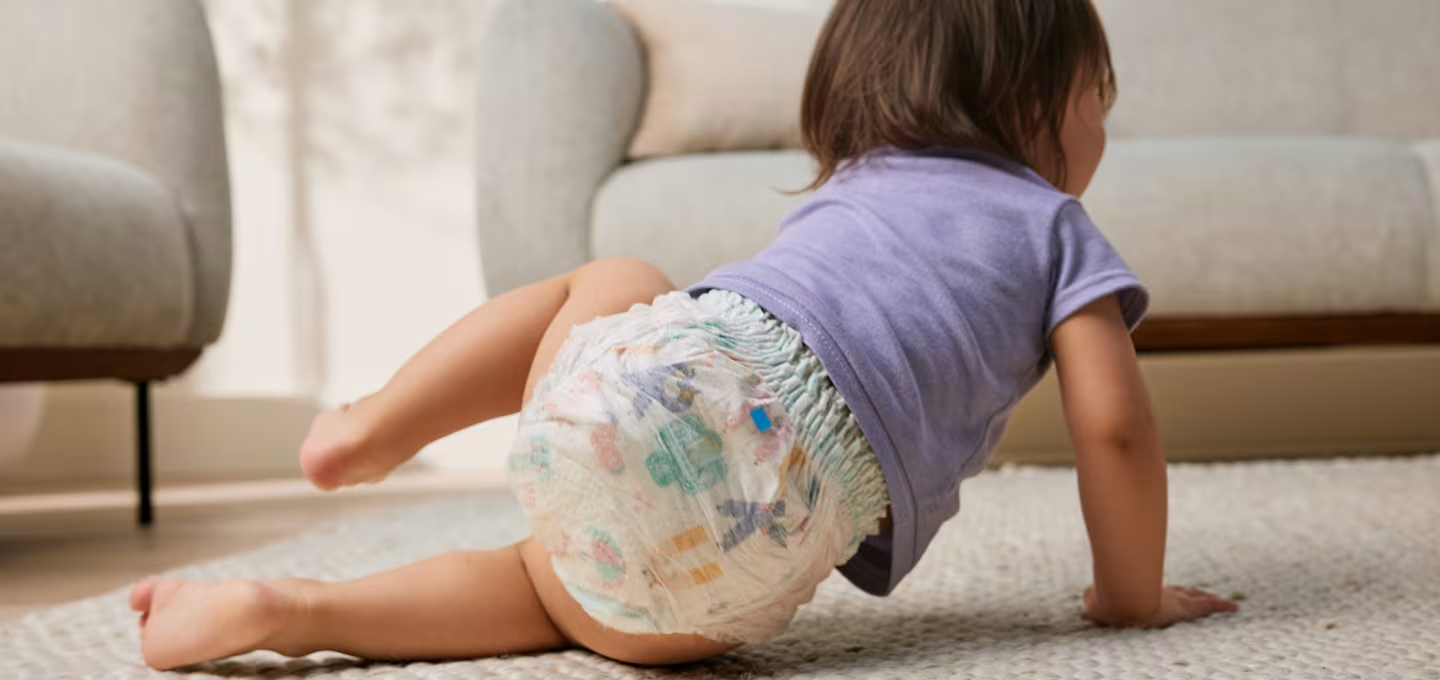
What Are Pampers Nappies Made Of? Ingredients Explained
Wondering what Pampers nappies are made of? Discover the dermatologically tested ingredients for your baby's delicate skin. Learn more now!
Read more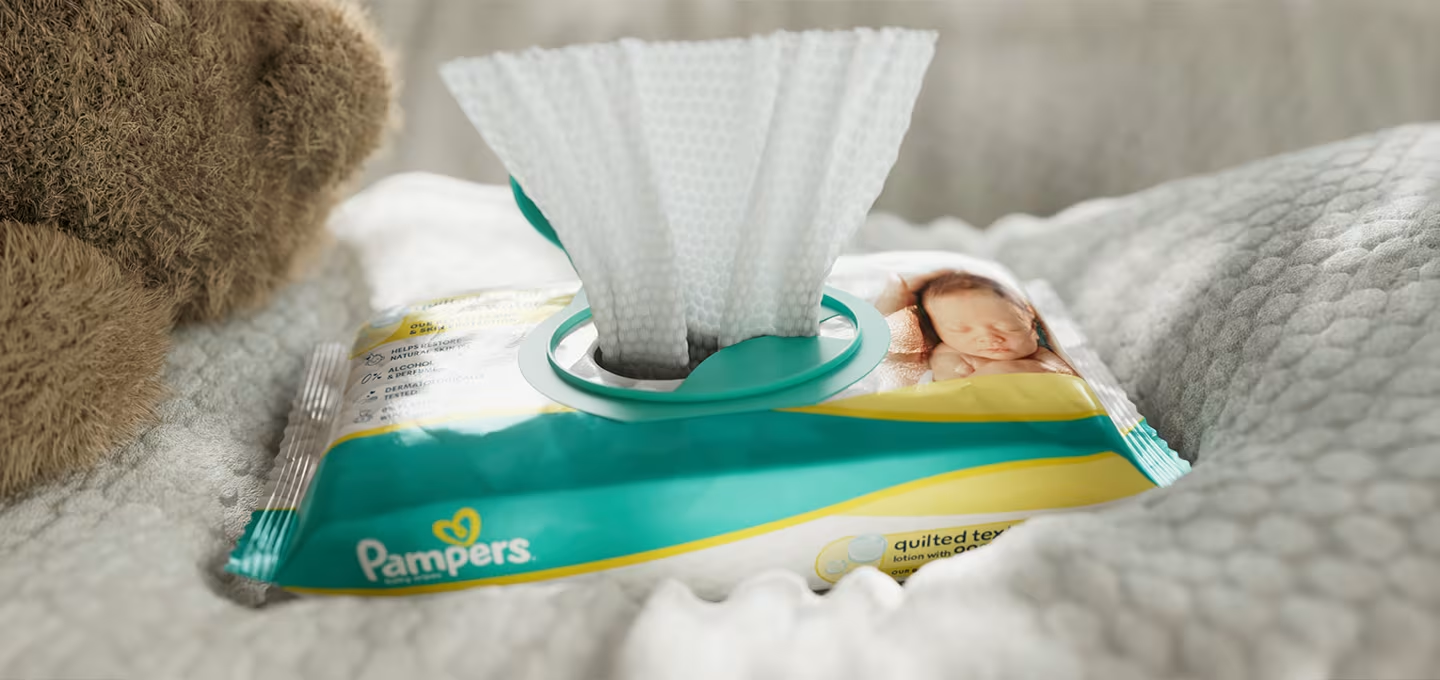
Baby Wipes Ingredients – What’s Inside Pampers Wipes?
Find out what Pampers baby wipes are made of. Carefully selected, dermatologically tested ingredients help gently clean and care for your baby’s delicate skin.
Read more
Pampers Safety Promise
Explore the Pampers safety process, including product testing, manufacturing controls and monitoring systems designed to ensure baby-safe nappies and wipes.
Read more
Pampers Products Backed by Experts
Learn how Pampers nappies and wipes are tested for safety, including OEKO-TEX® certification, dermatological testing and scientific research behind our products.
Read more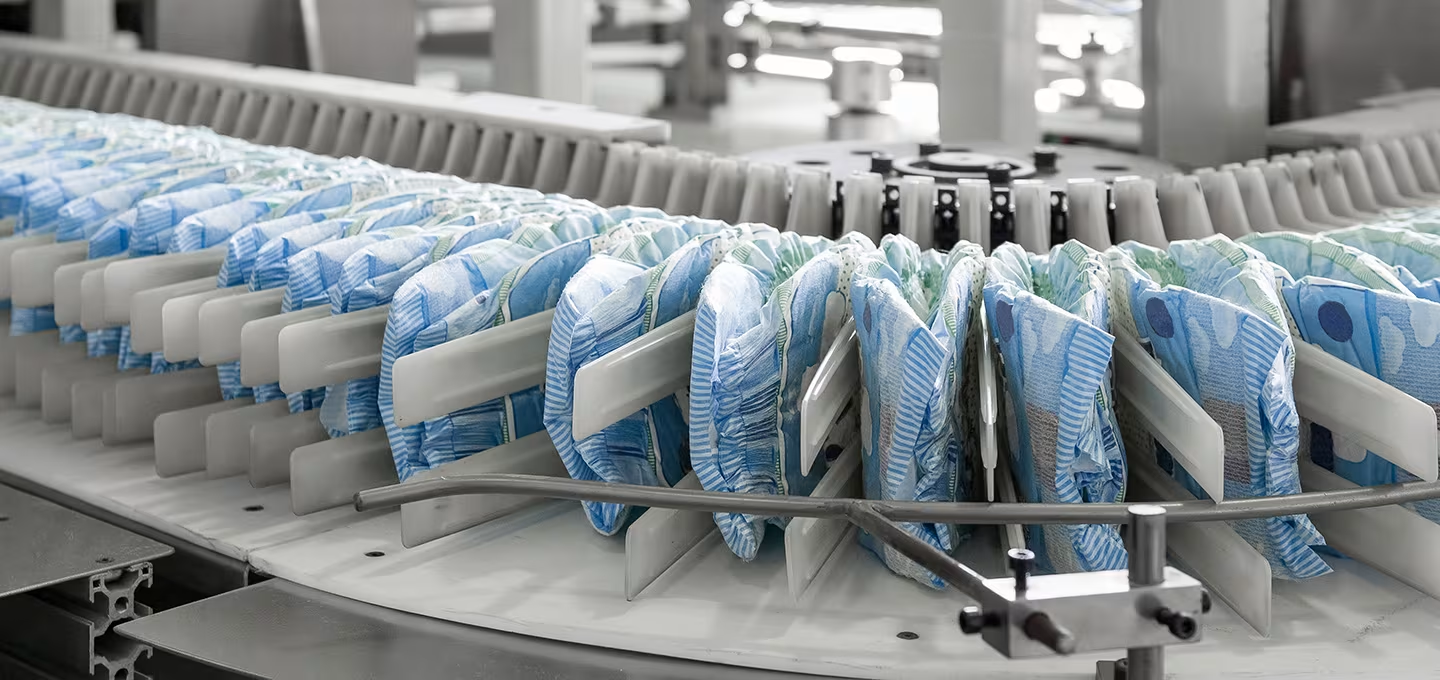
How Are Pampers Nappies and Wipes Manufactured?
Wondering where Pampers nappy and wipes are made? See how Pampers are made in Europe by experts dedicated to creating safe, trusted protection for your baby’s delicate skin.
Read morePampers Baby Wipes
Care for your baby’s delicate skin with Pampers Baby Wipes. Gentle, protective and made with up to 99% water for everyday comfort.
Read moreWhat Are Pampers Nappies Made Of? Ingredients Explained
Wondering what Pampers nappies are made of? Discover the dermatologically tested ingredients for your baby's delicate skin. Learn more now!
Read moreBaby Wipes Ingredients – What’s Inside Pampers Wipes?
Find out what Pampers baby wipes are made of. Carefully selected, dermatologically tested ingredients help gently clean and care for your baby’s delicate skin.
Read morePampers Safety Promise
Explore the Pampers safety process, including product testing, manufacturing controls and monitoring systems designed to ensure baby-safe nappies and wipes.
Read morePampers Products Backed by Experts
Learn how Pampers nappies and wipes are tested for safety, including OEKO-TEX® certification, dermatological testing and scientific research behind our products.
Read moreHow Are Pampers Nappies and Wipes Manufactured?
Wondering where Pampers nappy and wipes are made? See how Pampers are made in Europe by experts dedicated to creating safe, trusted protection for your baby’s delicate skin.
Read morePampers Baby Wipes
Care for your baby’s delicate skin with Pampers Baby Wipes. Gentle, protective and made with up to 99% water for everyday comfort.
Read moreWhat Are Pampers Nappies Made Of? Ingredients Explained
Wondering what Pampers nappies are made of? Discover the dermatologically tested ingredients for your baby's delicate skin. Learn more now!
Read more