
Separation Anxiety in Babies


There might come a time when your baby or toddler starts to behave a little differently. Your little one might get clingy, become fearful of strangers or cry when he or she is left alone or at night.
This is known as separation anxiety, and it’s a normal part of your child’s development.
Read on to find out what causes separation anxiety, when it typically starts and what you can do to help reassure your baby or toddler during this developmental stage.

What Is Separation Anxiety?
Separation anxiety is a phase of development that almost all children go through.
Sometime between the ages of around 6 months and 3 years, your child – no matter how calm and contented so far – may suddenly become clingy and anxious around strangers or when left alone.
Don’t worry through – although it can be challenging at times, this is a completely normal part of the emotional development of your baby or toddler. Your little one will usually grow out of it by around 3 years of age.
What Are the Signs of Separation Anxiety in Your Baby?
During the separation anxiety phase, your baby or toddler may start behaving a bit differently. Common signs of separation anxiety in your child might include:
When Does Separation Anxiety Start?
For some babies, separation anxiety can start as early as around 6 months of age, although precisely when this occurs differs from child to child.
Around this time your child starts to realise how dependent he or she is on you and the other people in your closest family circle. As a result, your baby starts to feel less safe when you’re not there.
Your child also becomes progressively more aware of his or her surroundings from this time on, so unfamiliar situations can also make your toddler or baby feel upset or insecure.
How Long Does Separation Anxiety Last?
Separation anxiety often starts to fade away around or soon after your baby’s first birthday.
Keep in mind, though, that all children develop at their own pace. So, it’s nothing out of the ordinary if your toddler continues to show signs of separation anxiety until he or she is about 3 years old.
In some rare circumstances, separation anxiety can last longer. Talk to your child's doctor or your health visitor if you’re concerned about your child’s anxiety.
How to Deal With Your Baby’s Separation Anxiety
These are some steps you can take to cope with your baby’s separation anxiety:
Separation Anxiety in Babies at Night
It can be challenging if your child feels anxious when you leave the room before bed or wakes up and is upset to find you’re not there during the night.
This can be a trying and exhausting situation for both you and your baby. But rest assured that this period will pass. Try to stay calm and develop a consistent pattern of behaviour during this phase.
Combined with some of the techniques described above, establishing and sticking to a consistent bedtime routine may help your little one get off to sleep more easily.
Knowing what’s going to happen next can reassure and comfort your child. A typical bedtime routine might include giving your baby a bath, changing him or her into a fresh nappy and pyjamas, reading a bedtime story and giving a goodnight kiss and cuddle.
Your baby’s sleep patterns can change constantly over the first year or two, and how you deal with these changes will probably differ depending on your child’s age as well as your individual parenting style.
It’s always OK to reassure and comfort your child if he or she is feeling anxious at night. Often just picking your baby up and letting him or her know that you’re still there may be enough.
In time, your baby will learn that you’ll still be there in the morning. Talk to your health visitor if you need help with any sleep-related issues.
FREQUENTLY ASKED QUESTIONS
Separation anxiety is a natural part of your baby’s development as she moves toward toddlerhood and becomes more independent. In fact, it’s just as important as other milestones like taking those first steps and learning to talk.
Keep in mind that in time this difficult phase will pass. And, look at it from a positive angle: Your baby’s separation anxiety is a sign that you’ve already bonded closely with your little one, so you must be doing a great job!

What You Need To Know About Object Permanence
Dive into the child psychology and learn about object permanence. How child grasps the existence of unseen objects and what object permanence truly means.
Read more
Baby Arching Back – Is It Normal?
Discover why a baby may be arching their back and crying. Understand the causes, solutions, and when it's necessary to consult a doctor.
Read more
When Do Babies Sit Up on Their Own?
When do babies sit up? Learn when to expect this milestone, how to help your baby sit up safely, and tips to support their development with expert advice.
Read more
29 Baby Game Ideas for Your Baby's First Year
Playing together in the first year can benefit your baby’s development. Discover some fun games you can play with your baby at home.
Read more
Baby development 3 to 9 months: growth phases
Navigate the exciting journey of your baby's growth with our guide. From baby phases to detailed insights into your 3-9 month old baby development.
Read more
10 step baby yoga routine for sitting babies
Yoga stretches your baby’s whole body, leaving them relaxed and happy. Click to discover the exercises you can perform with your baby!
Read more
All You Need to Know About Newborn, Infant, Baby and Toddler Age Ranges
Wondering what age is considered a toddler? Dive into our guide that helps you understand your child's development from newborn to toddler age.
Read more
Caring for the Soft Spot (Fontanelle) on Your Baby’s Head
Your baby’s head has delicate soft spots called fontanelles. Find out what these soft spots are, when they’ll harden, and some easy ways to keep your little one’s head safe.
Read more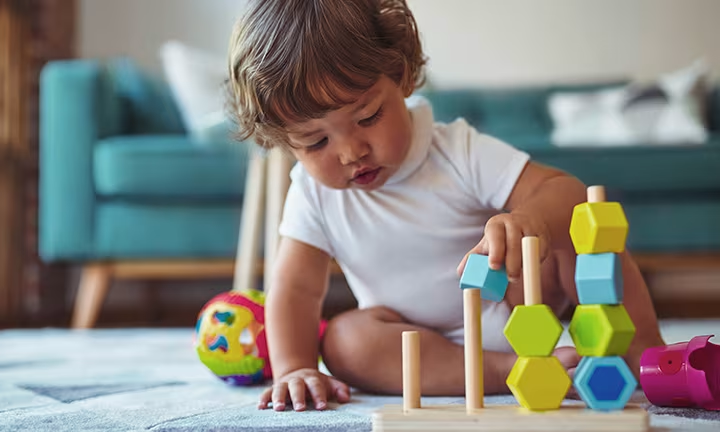
When Do Babies Develop Pincer Grasp?
Pincer grasp – holding an object between the thumb and first finger – is one of your baby’s fine motor skills. Learn when to anticipate this development.
Read more
Baby Growth Spurts: Signs, Timing & Tips to Help Your Baby Through Them
Is your baby suddenly hungrier, fussier or not sleeping well? It could be a growth spurt. Learn when they happen, how long they last, and how to support your little one.
Read moreWhat You Need To Know About Object Permanence
Dive into the child psychology and learn about object permanence. How child grasps the existence of unseen objects and what object permanence truly means.
Read moreBaby Arching Back – Is It Normal?
Discover why a baby may be arching their back and crying. Understand the causes, solutions, and when it's necessary to consult a doctor.
Read moreWhen Do Babies Sit Up on Their Own?
When do babies sit up? Learn when to expect this milestone, how to help your baby sit up safely, and tips to support their development with expert advice.
Read more29 Baby Game Ideas for Your Baby's First Year
Playing together in the first year can benefit your baby’s development. Discover some fun games you can play with your baby at home.
Read moreBaby development 3 to 9 months: growth phases
Navigate the exciting journey of your baby's growth with our guide. From baby phases to detailed insights into your 3-9 month old baby development.
Read more10 step baby yoga routine for sitting babies
Yoga stretches your baby’s whole body, leaving them relaxed and happy. Click to discover the exercises you can perform with your baby!
Read moreAll You Need to Know About Newborn, Infant, Baby and Toddler Age Ranges
Wondering what age is considered a toddler? Dive into our guide that helps you understand your child's development from newborn to toddler age.
Read moreCaring for the Soft Spot (Fontanelle) on Your Baby’s Head
Your baby’s head has delicate soft spots called fontanelles. Find out what these soft spots are, when they’ll harden, and some easy ways to keep your little one’s head safe.
Read moreJoin Pampers Club and get:
- PAMPERS COUPONS
- TOOLS & QUIZZES
- PARENTING TIPS
 PAMPERS COUPONS
 TOOLS & QUIZZES
 PARENTING TIPS