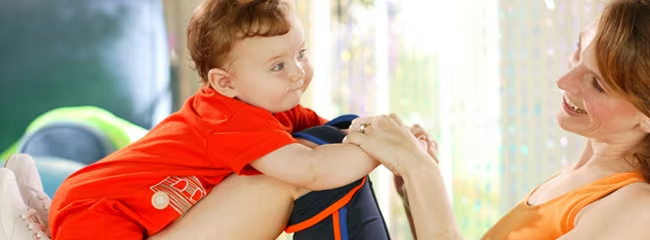
10 step baby yoga routine for sitting babies


Yoga stretches your baby's whole body, leaving them relaxed and happy. It also helps progress key developmental skills such as foot play, coordination, and balance and it can help strengthen your bond and communication with your little one. The idea is to give your baby the opportunity to stretch their whole body and experience different body positions. The Pampers yoga routine has been designed in conjunction with a qualified baby yoga instructor and is safe to practice at home. Ensure that your little one has a well-fitting nappy such as Pampers Active Fit which will adapt to their movements. This is a big workout for your little one, so go gently at first, reading your baby's signals and mood with every step. Never force the movements and stop if your baby is not happy. Start off with just a couple of repetitions, increasing length and duration as you learn together.

Top tips
Twinkling Star Sequence
A simple range of 10 moves that are safe and easy to learn but that will give your baby a chance to stretch their body and learn new movements.

Gently, but firmly stroke your baby down their body and limbs. Massage their feet in a clockwise direction with your thumbs. Start in lying if you can, but move to sitting if your baby wants to move.
Benefits
Gets them in the mood for activity and reassures.

Encourage your baby to grip your finger and gently stretch out their arms away from their body. Stretch their legs, and then bring the opposite arm and leg to meet diagonally. “Streeetch and reeelax...”
Benefits
Promotes their body awareness.

Hold onto your baby's lower legs, and gently ‘cycle' the legs into the abdomen. Start with the right leg. Go as fast as your baby is comfortable with. This can be done in sitting or lying.
Benefits
Great for coordination.

Sit back on your heels, hold your baby firmly under the arms, tighten your tummy muscles and lift your baby off the floor facing you. See if your baby will push off the floor with their feet. Dont over stimulate!
Benefits
Inspires confidence.


Lay your baby over your legs. They may not enjoy tummy time at first, but try placing a favorite toy on the floor as a distraction. Gently raise your thigh closest to your baby's head off the floor and lower it again. This is Cat. Raise the other thigh off the mat so your baby is in a downward position for Dog.
Benefits
Tummy-time in a fun way! Stretches baby's back.

Roll your baby gently down your legs. For more confidence first roll your baby towards you maintaining eye contact before rolling away down to your feet. Pause before returning for a cuddle.
Benefits
Boosts the whole body and helps to develop independence.

Kneel over your baby, gently holding their arms and legs with gentle pressure. This is very calming and good for bonding.
Benefits
Deeply reassuring and calming for baby.

Simulate raindrops falling on your baby with light finger touch, then a rainbow comes out! Place your fingers on your baby's calves, hide your face behind and open the legs out to the side. “Peek-a-boo!”
Benefits
Develops early communication skills.

Babies are very sensitive to touch and vibration. Hum on your baby's crown, or if lying down, their chest - heart space – this will be very calming and can act as a very effective distraction.
Benefits
Helps baby to calm down and distracts them if they're worried.

At last! Time to relax together. This is a VERY important part of your baby yoga adventure. Make sure you take time to lie down together with no distractions. Try and extend this stage over time.
Benefits
Your baby will love the stillness and spending time with you by their side.


Baby Arching Back – Is It Normal?
Discover why a baby may be arching their back and crying. Understand the causes, solutions, and when it's necessary to consult a doctor.
Read more
When Do Babies Sit Up on Their Own?
When do babies sit up? Learn when to expect this milestone, how to help your baby sit up safely, and tips to support their development with expert advice.
Read more
29 Baby Game Ideas for Your Baby's First Year
Playing together in the first year can benefit your baby’s development. Discover some fun games you can play with your baby at home.
Read more
Separation Anxiety in Babies
Separation anxiety is a normal fear of being apart from parents. Get some tips for helping your baby feel secure during this phase.
Read more
Baby development 3 to 9 months: growth phases
Navigate the exciting journey of your baby's growth with our guide. From baby phases to detailed insights into your 3-9 month old baby development.
Read more
All You Need to Know About Newborn, Infant, Baby and Toddler Age Ranges
Wondering what age is considered a toddler? Dive into our guide that helps you understand your child's development from newborn to toddler age.
Read more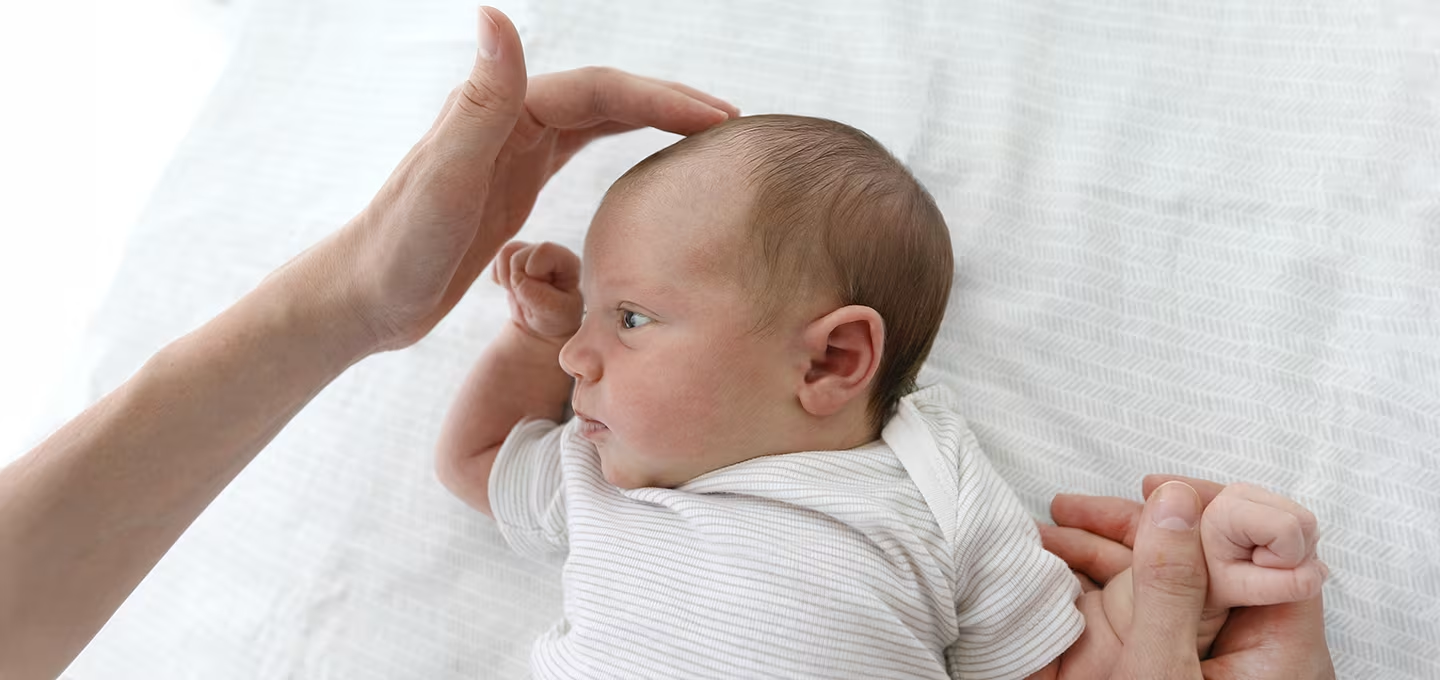
Caring for the Soft Spot (Fontanelle) on Your Baby’s Head
Your baby’s head has delicate soft spots called fontanelles. Find out what these soft spots are, when they’ll harden, and some easy ways to keep your little one’s head safe.
Read more
When Do Babies Develop Pincer Grasp?
Pincer grasp – holding an object between the thumb and first finger – is one of your baby’s fine motor skills. Learn when to anticipate this development.
Read more
Baby Growth Spurts: Signs, Timing & Tips to Help Your Baby Through Them
Is your baby suddenly hungrier, fussier or not sleeping well? It could be a growth spurt. Learn when they happen, how long they last, and how to support your little one.
Read more
What You Need To Know About Object Permanence
Dive into the child psychology and learn about object permanence. How child grasps the existence of unseen objects and what object permanence truly means.
Read moreBaby Arching Back – Is It Normal?
Discover why a baby may be arching their back and crying. Understand the causes, solutions, and when it's necessary to consult a doctor.
Read moreWhen Do Babies Sit Up on Their Own?
When do babies sit up? Learn when to expect this milestone, how to help your baby sit up safely, and tips to support their development with expert advice.
Read more29 Baby Game Ideas for Your Baby's First Year
Playing together in the first year can benefit your baby’s development. Discover some fun games you can play with your baby at home.
Read moreSeparation Anxiety in Babies
Separation anxiety is a normal fear of being apart from parents. Get some tips for helping your baby feel secure during this phase.
Read moreBaby development 3 to 9 months: growth phases
Navigate the exciting journey of your baby's growth with our guide. From baby phases to detailed insights into your 3-9 month old baby development.
Read moreAll You Need to Know About Newborn, Infant, Baby and Toddler Age Ranges
Wondering what age is considered a toddler? Dive into our guide that helps you understand your child's development from newborn to toddler age.
Read moreCaring for the Soft Spot (Fontanelle) on Your Baby’s Head
Your baby’s head has delicate soft spots called fontanelles. Find out what these soft spots are, when they’ll harden, and some easy ways to keep your little one’s head safe.
Read moreWhen Do Babies Develop Pincer Grasp?
Pincer grasp – holding an object between the thumb and first finger – is one of your baby’s fine motor skills. Learn when to anticipate this development.
Read moreJoin Pampers Club and get:
- PAMPERS COUPONS
- TOOLS & QUIZZES
- PARENTING TIPS
 PAMPERS COUPONS
 TOOLS & QUIZZES
 PARENTING TIPS