Caring for the Soft Spot (Fontanelle) on Your Baby’s Head

%20on%20Your%20Baby%E2%80%99s%20Head&image=https%3A%2F%2Fimages.ctfassets.net%2F2ql69mthp94m%2F3Kv0KOtko8MGGeJsCVfszJ%2Fd8fefc5af715d0a04490c49290aae559%2FCaring-for-soft-spot_1151398073_1440x680.jpg)
%20on%20Your%20Baby%E2%80%99s%20Head)
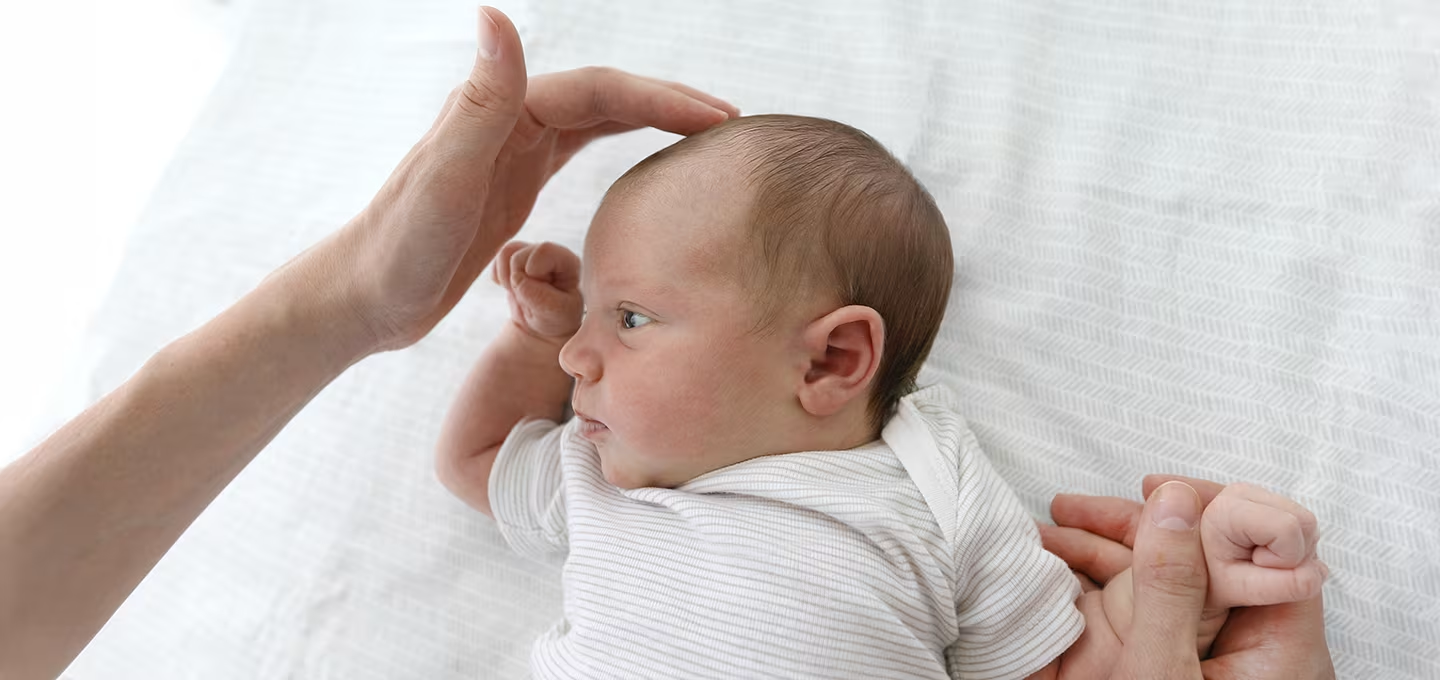
One of the first things you might notice about your newborn baby is a couple of soft spots on the head. These soft spots are called fontanelles, and they’re perfectly normal. In fact, they play an important role in your baby’s development.
Key Takeaways
Let’s take a closer look at the soft spots, how to care for them, when you can expect them to harden, and when it might be time to have them checked over.
What Are Baby Soft Spots and Where Are They?
All babies are born with two soft spots (fontanelles) on their heads, where the bones that form the skull haven’t yet fused. The larger soft spot (anterior fontanelle) is toward the front of the head, while there is another, smaller soft spot (the posterior fontanelle) towards the back.
![Illustration of a baby’s head showing anterior and posterior fontanelles, labeled to explain the location of baby soft spots.]](https://images.ctfassets.net/2ql69mthp94m/VYIU95iGuLx2RMU8PhBix/ddce96e5e5d976a174bbd884130cc775/US_P_Soft_spot_720px.jpg?fm=avif&w=3840&q=75 "Illustration of a baby’s head showing anterior and posterior fontanelles, labeled to explain the location of baby soft spots.")
Why Do Babies Have Soft Spots?
The soft spots do two essential jobs for your little one:

Baby Growth Chart Calculator
Keep an eye on your baby’s height, weight, and head circumference to average growth with our simple tool.
This is a mandatory field.
This is a mandatory field.
This is a mandatory field.
This is a mandatory field.
*Input details of your baby’s last measurements **Source: World Health Organization
When Does a Baby's Soft Spot Close or Go Away?
During your baby’s first few months, both soft spots should remain flat and open. So, at what age do they close? As your little one grows, you’ll notice these soft spots slowly shrinking, usually closing up completely around their first birthday, or shortly after.
What Happens If You Touch the Soft Spot on Your Baby's Head?
Don’t worry! As long as you’re gentle, such as when you’re holding your baby and supporting their head and neck, or during bath time, you won't hurt them.
Right underneath those soft spots is a tough, protective membrane that guards their brain. Lightly touching or washing the area is absolutely fine.
Just make sure you remind everyone, including friends, family, or anyone caring for your baby, to handle their head gently as well.
What Does It Mean When a Baby's Soft Spot Is Pulsating?
Sometimes you might notice the soft spot pulsing a little. This is normal - their blood is circulating, and you can occasionally see the movement beneath the softer area. Nothing at all to worry about!
What Causes a Sunken Soft Spot on Your Baby’s Head?
If your baby’s soft spot appears a bit sunken, it may mean they're dehydrated -perhaps they haven’t had enough breast milk or formula. It’s easier for babies to become dehydrated if they have a fever, have been unwell, or have had diarrhea too.
Other signs of dehydration to look out for include:
If you think your baby may be dehydrated, contact your health advisor or GP straight away.
And just so you know, a sunken soft spot doesn’t always mean dehydration, so it’s best to get professional advice.
What Should You Do If Your Baby Hits Their Soft Spot?
If your baby bumps or injures their soft spot, call your doctor for advice.
If you notice any swelling, bulging of the soft spot, or bruising around their eyes or behind their ears, it could be more serious, such as a concussion. Call 999 immediately if you see these signs.
Watch for the following after a bump: seek emergency help if you notice any of them:
When Should You Be Concerned About Your Baby's Soft Spot?
Knowing when to be concerned about soft spots is important for parents. Very rarely, not having any soft spots can signal a rare condition known as craniosynostosis, where the skull bones fuse too early, causing an unusual head shape. See your GP if:
The Bottom Line
Your baby’s soft spots might look strange, but they serve an important purpose - to help your baby through the birth canal and allow their skull to grow for a developing brain.
By about 12 months, these fontanelles generally close. Until then, just be gentle when holding or cuddling your little one.
If your baby ever bumps their soft spot and you’re worried, contact your GP or health advisor straight away.
And if you notice flatter places on their head, it may be because they’re lying in the same position too often. Pressure on those soft bones can lead to a flat area. Find out more about flat head syndrome in our dedicated guide.

Baby Arching Back – Is It Normal?
Discover why a baby may be arching their back and crying. Understand the causes, solutions, and when it's necessary to consult a doctor.
Read more
When Do Babies Sit Up on Their Own?
When do babies sit up? Learn when to expect this milestone, how to help your baby sit up safely, and tips to support their development with expert advice.
Read more
29 Baby Game Ideas for Your Baby's First Year
Playing together in the first year can benefit your baby’s development. Discover some fun games you can play with your baby at home.
Read more
Separation Anxiety in Babies
Separation anxiety is a normal fear of being apart from parents. Get some tips for helping your baby feel secure during this phase.
Read more
Baby development 3 to 9 months: growth phases
Navigate the exciting journey of your baby's growth with our guide. From baby phases to detailed insights into your 3-9 month old baby development.
Read more
10 step baby yoga routine for sitting babies
Yoga stretches your baby’s whole body, leaving them relaxed and happy. Click to discover the exercises you can perform with your baby!
Read more
All You Need to Know About Newborn, Infant, Baby and Toddler Age Ranges
Wondering what age is considered a toddler? Dive into our guide that helps you understand your child's development from newborn to toddler age.
Read more
When Do Babies Develop Pincer Grasp?
Pincer grasp – holding an object between the thumb and first finger – is one of your baby’s fine motor skills. Learn when to anticipate this development.
Read more
Baby Growth Spurts: Signs, Timing & Tips to Help Your Baby Through Them
Is your baby suddenly hungrier, fussier or not sleeping well? It could be a growth spurt. Learn when they happen, how long they last, and how to support your little one.
Read more
What You Need To Know About Object Permanence
Dive into the child psychology and learn about object permanence. How child grasps the existence of unseen objects and what object permanence truly means.
Read moreBaby Arching Back – Is It Normal?
Discover why a baby may be arching their back and crying. Understand the causes, solutions, and when it's necessary to consult a doctor.
Read moreWhen Do Babies Sit Up on Their Own?
When do babies sit up? Learn when to expect this milestone, how to help your baby sit up safely, and tips to support their development with expert advice.
Read more29 Baby Game Ideas for Your Baby's First Year
Playing together in the first year can benefit your baby’s development. Discover some fun games you can play with your baby at home.
Read moreSeparation Anxiety in Babies
Separation anxiety is a normal fear of being apart from parents. Get some tips for helping your baby feel secure during this phase.
Read moreBaby development 3 to 9 months: growth phases
Navigate the exciting journey of your baby's growth with our guide. From baby phases to detailed insights into your 3-9 month old baby development.
Read more10 step baby yoga routine for sitting babies
Yoga stretches your baby’s whole body, leaving them relaxed and happy. Click to discover the exercises you can perform with your baby!
Read moreAll You Need to Know About Newborn, Infant, Baby and Toddler Age Ranges
Wondering what age is considered a toddler? Dive into our guide that helps you understand your child's development from newborn to toddler age.
Read moreWhen Do Babies Develop Pincer Grasp?
Pincer grasp – holding an object between the thumb and first finger – is one of your baby’s fine motor skills. Learn when to anticipate this development.
Read moreJoin Pampers Club and get:
- PAMPERS COUPONS
- TOOLS & QUIZZES
- PARENTING TIPS
 PAMPERS COUPONS
 TOOLS & QUIZZES
 PARENTING TIPS