Preterm Labour: Signs and Causes

Key Takeaways
It’s natural to eagerly await your baby’s arrival around week 40 of pregnancy, but sometimes nature has other plans. Occasionally, premature labour can occur, and this may be a challenging time for parents. In this article, we'll explore the causes, symptoms and treatments of premature labour, so that both you and baby can remain safe and healthy. So, let's take a deep breath and dive into the world of premature labour.

Key Facts and Overview on Preterm Labour

What Causes Premature Birth?
Around three-quarters of pregnant people who give birth prematurely have gone into labour spontaneously. You may be wondering what can cause you to go into labour early? In many cases, precisely what causes premature labour and birth in humans is unknown. In the remaining quarter of all premature births, due to a complication affecting the pregnant person or the baby, doctors have recommended either inducing labour or performing a caesarean section before the pregnancy reaches full-term.
Although the precise reasons for giving birth prematurely are not always known, there are some factors that may make an induced or spontaneous preterm labour (or an early caesarean section) more likely.
The most common factors that increase the risk of premature birth include:
In Summary What causes premature birth is not known in every case, but the risk of giving birth preterm can increase if there is a health condition or infection in the pregnant person and/or the baby, if you’re pregnant with twins or multiples, or if the pregnant person has had a previous premature birth or late miscarriage. Lifestyle factors such as smoking can also play a role. |
Signs of Preterm Labour
It’s natural to wonder ‘What does premature labour feel like?’ Determining as soon as possible whether labour has started, is very important, (add commas) so that measures can be taken to ensure the safest possible birth or even delay the delivery if this is the best course of action. Whether you’re at 25, 30, 32, 35, etc., weeks pregnant, contact your midwife for advice if you experience any of the following signs or symptoms of early preterm labour before 37 weeks of pregnancy.
Signs of premature labour can include:
If you’re less than 37 weeks pregnant and think you might be experiencing signs and symptoms of preterm labour, immediately call your midwife or the maternity unit where you plan to give birth.
I started to get what felt like period pain but thought nothing of it, so carried on as normal. The pain started to get worse, but it never entered our minds that it was labour pains, as I was only 25 weeks.
Sue, Mum of preemie twins at 25 weeks
Braxton Hicks vs Preterm Labour
Keep in mind, not all feelings of contractions indicate that labour has begun. It’s possible you may be experiencing Braxton Hicks practice contractions.
Braxton Hicks contractions usually happen in the second or third trimester of pregnancy and are basically false labour pains. They are your body’s way of helping you prepare for birth by contracting and relaxing your uterine muscles, without opening the cervix like in real labour.
These ‘false’ contractions aren’t painful, but they may be uncomfortable and feel like mild menstrual cramps or a tightening that comes and goes in the stomach. If you’re unsure whether you’re experiencing preterm labour contractions or Braxton Hicks, it’s recommended to contact your midwife or maternity unit for advice. The following table may also help you to distinguish between the two:

| BRAXTON HICKS CONTRACTIONS | TRUE LABOUR CONTRACTIONS |
|---|---|
| Braxton Hicks Contractions are irregular and don’t become progressively more frequent. | Labour contractions are regular, predictable, and grow closer together over time. |
| Braxton Hicks Contractions don’t become more intense and long-lasting. | You experience a steady increase in the strength and/or duration of labour contractions. |
| Braxton Hicks Contractions are felt in the front of the body. | Labour contractions often start out in your lower back or abdomen. Sometimes they may feel like extreme period pains. |
| A change in activity or position may cause Braxton Hicks Contractions to lessen or stop. | A change in activity or position will not slow or stop labour contractions. |
What Happens if You’re in Preterm Labour?
If you believe you’re in preterm labour and you’ve contacted your midwife or maternity unit, they may offer you various tests and examinations to check if your waters have broken, to see if labour has begun or if an infection is present. They will then be able to discuss your options and the care that you and your baby may receive.
In some cases, preterm labour can be stopped or slowed down to give your baby a little more time to develop in your uterus or so you can be moved to a hospital with more advanced preterm baby care facilities.
If you do go into preterm labour, you’ll be assessed to determine whether it’s best to go ahead with delivery or give you medicine to try to stop or slow down the labour. Depending on how mature your baby is when labour starts, you may also be offered injections of a steroidal medicine that can help prepare their lungs for life outside the uterus and medicine to help the development of their brain.
Before making the decision, your midwife or doctor will discuss your situation with you, taking various factors into consideration, such as:
I was still in disbelief; my baby wasn't coming and I was going to keep him warm and safe for another ten weeks. I was wrong. A few hours later Archie Michael Smith was born.
Stacey, Preemie mum at 28 weeks
How Can You Reduce the Chances of Preterm Labour?
There is no sure-fire way to prevent preterm labour, however, some measures have been shown to help decrease the likelihood:
In Summary Certain actions have shown to help reduce the risk of premature labour, such as making healthy lifestyle choices, attending all your antenatal appointments, and protecting yourself from illness and infections that are associated with a higher rate of preterm labour. You may be offered medicine to slow down or stop premature labour after it’s started. Depending on how far along you are in your pregnancy, you may also be offered medicine to help prepare your baby’s lungs and/or brain for life outside the uterus. |
FAQS AT A GLANCE
Every situation is unique, and a baby’s survival depends upon the health of the baby and mother, how many weeks premature and any medical conditions present.
If your baby is born before 37 weeks pregnant, the neonatal team will provide specialist care according to their needs and do their utmost to help your baby.
The Bottom Line
Premature labour can often be an unexpected condition that can affect both mother and baby. It’s important to be aware of the signs and risk factors of preterm labour and to seek advice and help from your midwife or maternity unit if any of these signs or symptoms appear. Although there is no guaranteed way to prevent premature labour, there are steps you may wish to try that have been shown to help reduce the risk, such as avoiding smoking, adopting a healthy lifestyle and attending all your antenatal appointments. With early diagnosis and appropriate medical care, the outlook for your preterm baby can be significantly improved.
For further information, read our article on premature birth and preemies, as well as coping with the arrival of a preemie to find some helpful tips and advice to help you and your family through this trialing period.
Friends and families of babies born prematurely can now order their Pampers Preemie Protection Nappies online for free home delivery via www.pampers.co.uk. Pampers also continue to donate Pampers Preemie Protection nappies direct to hospitals, and via ASDA pharmacies (in-store only and subject to availability)
How We Wrote This Article The information in this article is based on the expert advice found in trusted medical and government sources, such as the National Health Service (NHS). You can find a full list of sources used for this article below. The content on this page should not replace professional medical advice. Always consult medical professionals for full diagnosis and treatment.
- https://maternitymattersdorset.nhs.uk/labour/premature/
- https://www.nhs.uk/pregnancy/your-pregnancy-care/antenatal-care-with-twins/#:~:text=Premature%20birth,are%20born%20before%2035%20weeks.
- https://www.nhs.uk/pregnancy/related-conditions/existing-health-conditions/overweight/
- https://www.nhs.uk/pregnancy/labour-and-birth/signs-of-labour/premature-labour-and-birth/
- https://www.pampers.co.uk/pregnancy/giving-birth/article/braxton-hicks-contractions
- https://www.stgeorges.nhs.uk/wp-content/uploads/2020/04/Vaccinations-in-pregnancy-PHE.pdf
- https://www.tommys.org/pregnancy-information/giving-birth/braxton-hicks
- https://www.tommys.org/pregnancy-information/premature-birth/causes-of-premature-birth
- https://www.tommys.org/pregnancy-information/premature-birth/causes-of-premature-birth/how-to-reduce-your-risk-of-premature-birth
- https://www.tommys.org/pregnancy-information/premature-birth/treatment-to-prevent-a-premature-birth
- https://www.torbayandsouthdevon.nhs.uk/uploads/25189.pdf
- https://www.who.int/news-room/fact-sheets/detail/preterm-birth
Read more about Prematurity

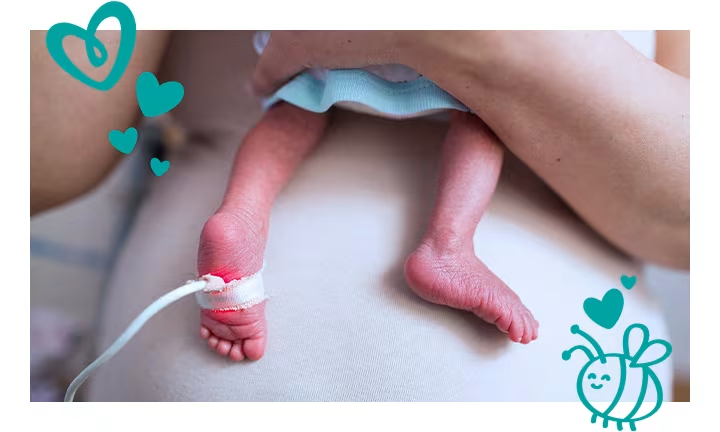
20 Need to know Facts about Premature Babies!
Learn about Pampers' premature baby nappies, designed for your preemie's health and comfort. Discover facts and myths about premature babies.
Read more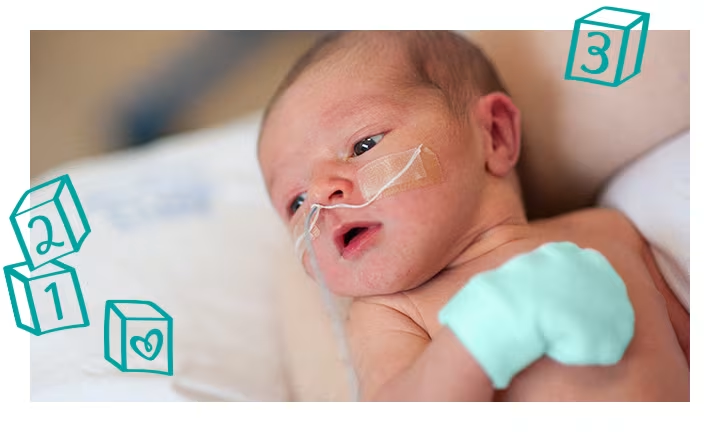
Corrected Gestational Age
All you need to know about corrected gestational age of preemies. Keep reading to learn all the details, including how to calculate your preemie baby’s corrected age.
Read more
The Story of Early Ernie
Pampers is committed to help make the world a better place for every baby including those born early: this story focuses on how preemie babies feel love through touch.
Read more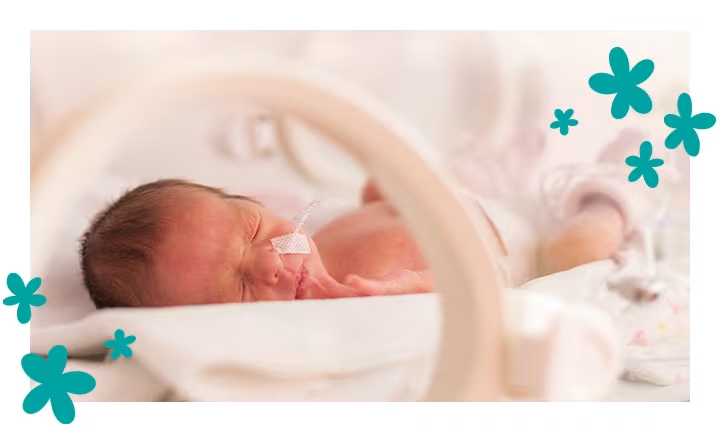
All About Premature Birth and Preterm Babies
All you need to know about the meaning of ‘premature’ birth and what a premature baby is, including signs of premature labour and the special health needs of a preemie.
Read more
All About Knitting for Premature Babies
Knit for preemies with this helpful guide! Get tips and free knitting patterns for premature babies, as well as ideas for donations and charities.
Read more
All About Premature Baby Nappies
It’s common for premature babies to need smaller nappies than the regular newborn sizes. Read about preemie nappies and how to choose the right one!
Read more20 Need to know Facts about Premature Babies!
Learn about Pampers' premature baby nappies, designed for your preemie's health and comfort. Discover facts and myths about premature babies.
Read moreCorrected Gestational Age
All you need to know about corrected gestational age of preemies. Keep reading to learn all the details, including how to calculate your preemie baby’s corrected age.
Read moreThe Story of Early Ernie
Pampers is committed to help make the world a better place for every baby including those born early: this story focuses on how preemie babies feel love through touch.
Read moreAll About Premature Birth and Preterm Babies
All you need to know about the meaning of ‘premature’ birth and what a premature baby is, including signs of premature labour and the special health needs of a preemie.
Read moreAll About Knitting for Premature Babies
Knit for preemies with this helpful guide! Get tips and free knitting patterns for premature babies, as well as ideas for donations and charities.
Read moreAll About Premature Baby Nappies
It’s common for premature babies to need smaller nappies than the regular newborn sizes. Read about preemie nappies and how to choose the right one!
Read more20 Need to know Facts about Premature Babies!
Learn about Pampers' premature baby nappies, designed for your preemie's health and comfort. Discover facts and myths about premature babies.
Read moreCorrected Gestational Age
All you need to know about corrected gestational age of preemies. Keep reading to learn all the details, including how to calculate your preemie baby’s corrected age.
Read moreJoin Pampers Club and get:
- PAMPERS COUPONS
- TOOLS & QUIZZES
- PARENTING TIPS
 PAMPERS COUPONS
 TOOLS & QUIZZES
 PARENTING TIPS