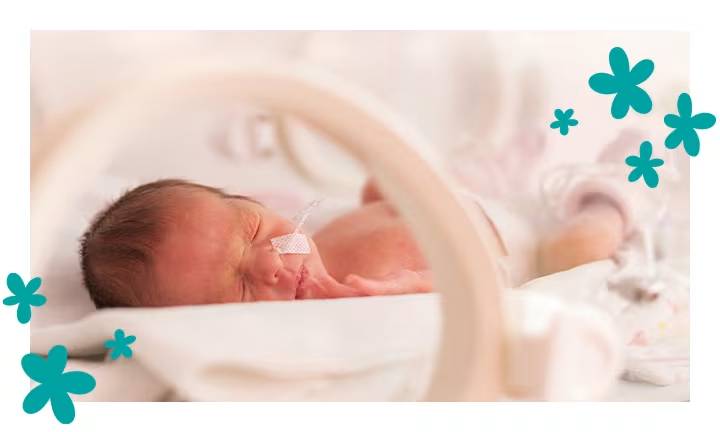
All About Premature Birth and Preterm Babies


Having a premature baby can be an overwhelming experience for any parent. However, it’s important to remember that every premature birth and family is unique, and your neonatal care team will provide you and your baby with the best care possible. With the right medical care and a supportive network around you, you can provide your preemie with the love and attention they need to thrive. In this article, we will discuss the meaning of ‘premature’ birth and what a premature baby is, including signs of premature labour and the special health needs of a preemie.

What Is Considered Premature Birth?
A full-term pregnancy lasts for about 40 weeks, calculated from the first day of your last menstrual period. This day is your estimated due date but, keep in mind, every pregnancy is different, and most babies are actually born in the week either side of their due date – not necessarily exactly on their due date.
If your baby is born up to 3 weeks before you reach 40 weeks of pregnancy it’s not necessarily classed as premature.
So, what does prematurity mean? Under the guidelines applied in the UK, if your baby is born before the end of the 37th week of pregnancy this is what is classed as a ‘preterm’ or ‘premature’ baby.
Not all ‘preterm babies’ fall into the same group and the neonatal care team will take into account the number of weeks your baby is premature. This may sometimes affect your baby’s early development and the type and amount of special care that may be needed in the weeks after birth.
Premature babies can be grouped into three broad categories based on the week of pregnancy they were born:
Birthweight Categories
You may also hear your preterm baby described in terms of how much they weigh at birth. As you might expect, premature babies tend to be smaller than babies born on or around their due date, because they had less time to grow inside the uterus.
The categories of low birthweight are:
In Summary Babies born before 37 weeks of pregnancy are considered premature, and how much additional medical care and support they could need varies a lot depending on how many weeks premature they are and how much they weigh at birth. |
How Common Is Premature Birth?
In the UK, around 8 out of every 100 babies are born before 37 weeks. Most of these premature babies will be born moderate to late preterm. Very preterm births are far less common, while extremely premature babies – born between 22 and 28 weeks of pregnancy – are even rarer, at less than 1 in every 100 births.
Most premature births occur naturally, but around a quarter of babies born before 37 weeks are delivered early to protect the health of the foetus and/or mother.
Risk Factors for Premature Birth
Premature birth is often spontaneous and there may be no known reason for it happening; however, there are a few risk factors that may increase the chances of giving birth prematurely. These include:
If you, your doctor, or midwife think you’re at risk of premature birth, you can discuss your options together to receive the best care possible.

How Early Can a Premature Baby Be Born?
With advances in medical science and standards of neonatal (newborn) care in neonatal care units (NICU), the chances of premature babies graduating from the NICU are improving all the time.
Can You Decrease the Chances of Preterm Labour?
There’s no magic recipe for preventing preterm labour, but some things have been shown to help lower the risk:
In Summary Certain things have been shown to help reduce the risk of early childbirth, such as making healthy lifestyle choices, attending all of your antenatal appointments, and taking steps to avoid or protect yourself from illness and infections that are known to be associated with a higher rate of premature labour. |
What Does Premature Labour Feel Like?
Call your midwife or the maternity unit where you plan to give birth straight away if you’re less than 37 weeks pregnant and think you might be experiencing signs of premature labour.
It’s important to determine as soon as possible whether labour really has started so that measures to ensure the safest possible birth – or delay delivery if this is the best course of action – are as effective as they can be.
Early signs of labour can include:
Keep in mind, not all feelings of contractions indicate that labour has begun. You may be experiencing Braxton Hicks practice contractions. If you’re unsure about what you’re experiencing, call your midwife or doctor right away. Read our article all about Preterm Labour to discover more about the cause, signs and symptoms.
What are the Potential Health Needs of Premature Babies?
As a parent, your greatest wish is for a safe and healthy birth and a happy and healthy child.
Keep in mind, that every preterm baby differs, including the medical conditions that may or may not be present, and modern neonatal care is capable of more than ever before.
The longer your foetus spends inside the uterus, the more time they have to develop and mature. This means that, generally, the less premature your baby is, the more development they will have gone through.
With all this said, below you’ll find some potential health conditions premature babies may have based on the week of pregnancy they were born:
Moderate to Late Premature Babies
If your baby was born moderate to late preterm (at 32 to 37 weeks), they may be pretty much like a full-term baby, only smaller. Some possible health conditions may include:
Very Premature Babies
Babies born at 28 to 32 weeks may face health conditions such as needing help with breathing. The specialist staff at the neonatal intensive care unit (NICU) will be able to explain any health issues.
Extremely Premature Babies
Babies born before 28 weeks are considered extremely premature and still have a lot of developing to do. Each baby's outcome depends on various factors like gestational age, birth weight and overall health.
Your baby may be required to stay in the NICU for an extended period of time. The midwives and NICU specialists will work closely with you to determine the best course of care for your baby. Every case is different, but your preemie will be in excellent hands in the Neonatal Care Unit.
Our article Navigating the Arrival of a Preterm Baby offers advice and information to help you navigate through this period whilst looking after your mental well-being.

FAQS AT A GLANCE
The reasons for a premature birth may not be known in every case, but some factors can make it more likely, such as:
- Pregnant with multiples
- An infection
- Early breaking of waters
- Abnormalities of the uterus or cervix
- If you have a chronic health condition such as diabetes or high blood pressure
- A previous preterm birth
- Fertility treatment
- Smoking.
The Bottom Line
Preterm birth and caring for a preemie baby can be a worrying prospect for you as a parent, but keep in mind that most premature babies fall into the moderate to late premature group, where complications– if any – are often minor.
To keep any risks to a minimum, it’s important to let your doctor or midwife know as soon as possible if you experience any possible signs of preterm labour such as regular contractions, cramping or a discharge of fluid.
If your baby does arrive early and needs special care, rest assured that they will be in the best hands. You’ll have access to the care and support you need to ensure that your baby has the best possible chance of thriving and reaching their full potential.
Pampers also continue to donate Pampers Preemie Protection nappies direct to hospitals, and via ASDA pharmacies (in-store only and subject to availability).
How We Wrote This Article The information in this article is based on the expert advice found in trusted medical and government sources, such as the National Health Service (NHS) and has been reviewed by the Bliss team. You can find a full list of sources used for this article below. The content on this page should not replace professional medical advice. Always consult medical professionals for full diagnosis and treatment.
- NHS: Week 39
- NHS: Premature Labour and Birth
- NHS: 24 weeks
- NHS: Vaccinations in Pregnancy
- NHS: Overweight
- NHS: Maternity Matters Dorset. ‘Premature Labour and Birth.’
- NHS: MULTIPLE BIRTHS - A PARENT’S GUIDE TO NEONATAL CARE
- ONS: Birth Characteristics in England and Wales
- Tommys: ‘Causes of Premature Birth.’
- Tommys: ‘Premature Birth Statistics.’
Read more about Prematurity

20 Need to know Facts about Premature Babies!
Learn about Pampers' premature baby nappies, designed for your preemie's health and comfort. Discover facts and myths about premature babies.
Read more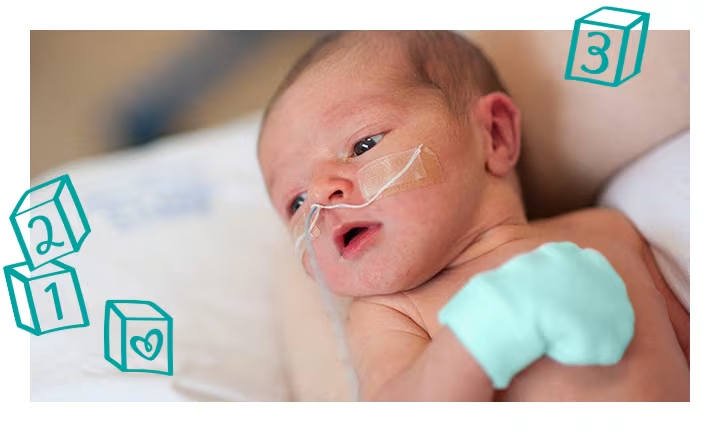
Corrected Gestational Age
All you need to know about corrected gestational age of preemies. Keep reading to learn all the details, including how to calculate your preemie baby’s corrected age.
Read more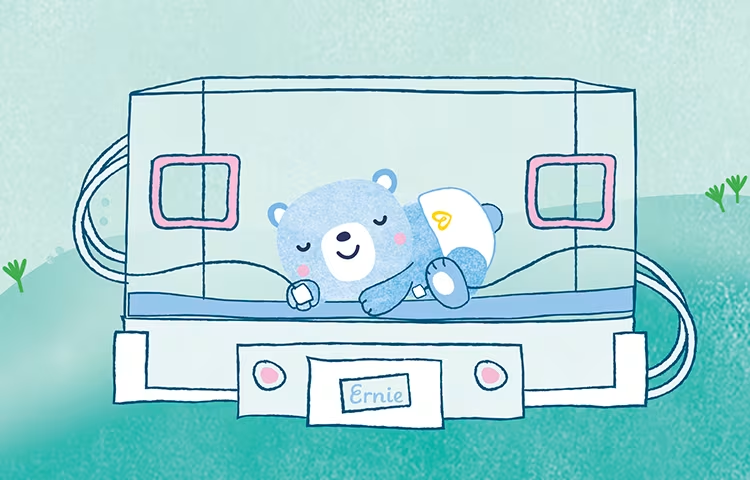
The Story of Early Ernie
Pampers is committed to help make the world a better place for every baby including those born early: this story focuses on how preemie babies feel love through touch.
Read more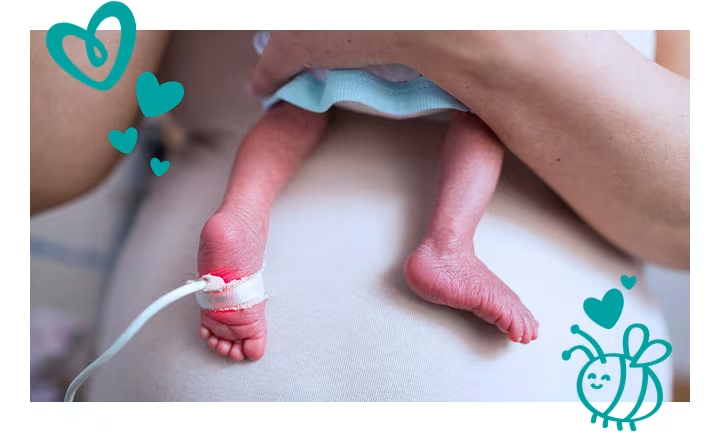
Preterm Labour: Signs and Causes
What is premature labour and what are the causes and signs to look out for? This article provides everything you need to know about preterm labour.
Read more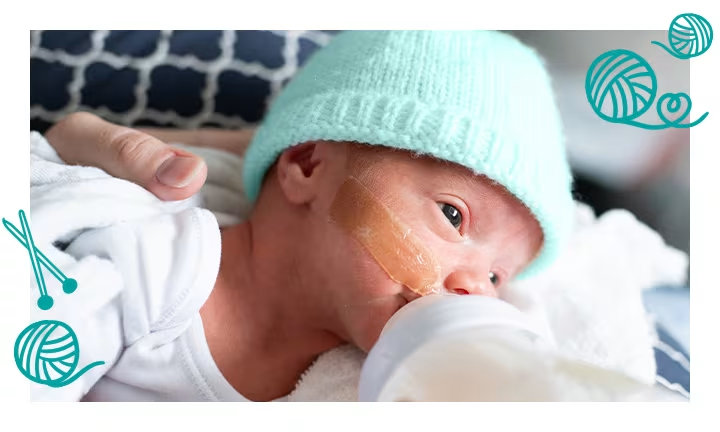
All About Knitting for Premature Babies
Knit for preemies with this helpful guide! Get tips and free knitting patterns for premature babies, as well as ideas for donations and charities.
Read more
All About Premature Baby Nappies
It’s common for premature babies to need smaller nappies than the regular newborn sizes. Read about preemie nappies and how to choose the right one!
Read more20 Need to know Facts about Premature Babies!
Learn about Pampers' premature baby nappies, designed for your preemie's health and comfort. Discover facts and myths about premature babies.
Read moreCorrected Gestational Age
All you need to know about corrected gestational age of preemies. Keep reading to learn all the details, including how to calculate your preemie baby’s corrected age.
Read moreThe Story of Early Ernie
Pampers is committed to help make the world a better place for every baby including those born early: this story focuses on how preemie babies feel love through touch.
Read morePreterm Labour: Signs and Causes
What is premature labour and what are the causes and signs to look out for? This article provides everything you need to know about preterm labour.
Read moreAll About Knitting for Premature Babies
Knit for preemies with this helpful guide! Get tips and free knitting patterns for premature babies, as well as ideas for donations and charities.
Read moreAll About Premature Baby Nappies
It’s common for premature babies to need smaller nappies than the regular newborn sizes. Read about preemie nappies and how to choose the right one!
Read more20 Need to know Facts about Premature Babies!
Learn about Pampers' premature baby nappies, designed for your preemie's health and comfort. Discover facts and myths about premature babies.
Read moreCorrected Gestational Age
All you need to know about corrected gestational age of preemies. Keep reading to learn all the details, including how to calculate your preemie baby’s corrected age.
Read moreJoin Pampers Club and get:
- PAMPERS COUPONS
- TOOLS & QUIZZES
- PARENTING TIPS
 PAMPERS COUPONS
 TOOLS & QUIZZES
 PARENTING TIPS