11 weeks pregnant
Congratulations, you have reached the 11th weekof pregnancyand are nearing the end of your first trimester. You may be experiencing new symptomsat 11 weeks pregnant such as morning sickness and food cravings or they may be subsiding and giving way to new ones like breast tenderness and growth. We have more information on what happens at this stage of your pregnancy and the developments your baby is making.

Highlights at 11 Weeks Pregnant
Here are some of the highlights from 11 weeks pregnant:
Your baby's head is developing, their features are becoming more distinct, and they are forming tiny tooth buds and genitals.
You may start to notice your breasts getting larger.
Your bump may start to become more noticeable, and it might be a good idea to take some photographs of your belly during 11 weeks of pregnancy and in the weeks to come!
Even though it’s still too early to find out your baby’s gender, why not have some fun with our Chinese gender predictor:
Fill in your info to get started:
This is a mandatory field.
Please select a due date!
Baby's Due Date*
Your Baby’s Development at 11 Weeks Pregnant
Inside the uterus, when you're 11 weeks pregnant, your little one looks like a teeny-tiny human. From an oversized head to tiny fingers complete with fingernails, this week is full of exciting growth and changes, both big and small!
At 11 weeks pregnant, your foetus's head makes up one-third of the total body length, but in the coming weeks the body will race to catch up and straighten out from its curved shape.
Your foetus's facial features are also slowly maturing. The bones of the face are now fully formed, the earbuds look more and more like ‘real' ears and eyelids are in place and fused shut.
When you're 11 weeks pregnant, your baby is moving a lot but you won't be able to feel this action for several more weeks to come.
To support all this growth, your foetus needs more nutrients and so the placenta has been growing fast and getting ready to provide it. Around 11 weeks pregnant, the placenta will be fully formed and will take over the role that the yolk sac has had in nourishing the foetus and removing waste.
Genitals are forming too, although it’s still too early for your doctor to tell if you're having a girl or a boy. But even though you don’t know your baby’s gender yet, why not start a list of your favourite baby names for boys and girls? Have some fun with our Baby Name Generator. You still have plenty of time to browse and find a name you love.
How Many Months Is 11 Weeks Pregnant?
How many months is 11 weeks pregnant? At 11 weeks pregnant, you’re likely in your third month of pregnancy, even though you may have no symptoms or much of a belly bump!
It's exciting to think about the arrival of your little one! Your doctor or midwife will offer you a ‘dating scan’ around 10 to 14 weeks to find out your due date. If you haven’t had your scan yet, try our Due Date Calculator in the meantime to get an idea of when your little one may join the world.
Your Baby’s Size at 11 Weeks Pregnant?
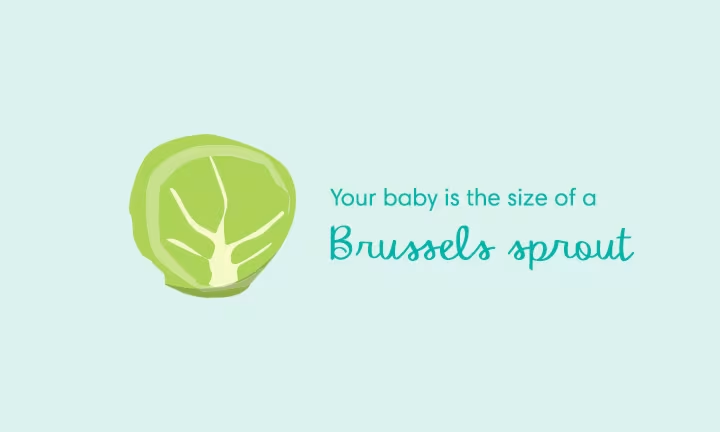
At 11 weeks pregnant, your foetus is about the size of a Brussels sprout this week. From crown to rump, the length is just over 40 mm.
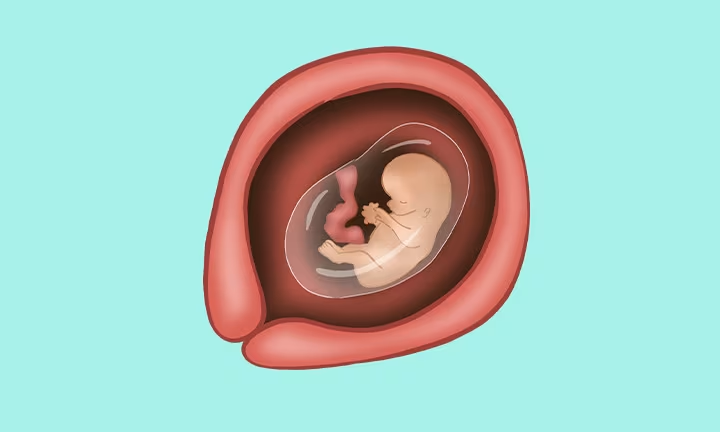
Your Baby: What Does 11 Weeks Pregnant Look Like?
For a more visual look at how things are developing inside your uterus, check out this illustration:
Your Body at 11 Weeks Pregnant
Know that you've done a fabulous job getting through the worst of the first trimester. It might have been a tough few weeks for you but there's light at the end of the tunnel. The second trimester is almost here, and it may just bring with it increased energy levels. You deserve it!
Your Symptoms at 11 Weeks Pregnant
Every pregnancy is unique and not every pregnant person will experience the same things during this period. To help you feel more prepared, we’ve listed some of the possible symptoms you may experience at 11 weeks pregnant:
Feeling hot and sweaty. Did you know there is now 50 percent more blood circulating in your body than before you were pregnant? All this extra blood volume is contributing to you feeling hotter and sweatier than usual. Put your feet up and stay hydrated!
Cramping. At 11 weeks pregnant it can be normal to feel some mild cramping which is kind of like period pain. Your uterus is expanding and your abdominal muscles and ligaments are stretching as your foetus and belly grow; this may cause some crampingand even pain around 11 weeks pregnant. Contact your doctor or midwife if you are bleeding at 11 weeks pregnant or anytime in your pregnancy, or if you're worried about any symptoms. Read more about the aches and pains of pregnancy here.
Headaches. These can be quite common in the first trimester but tend to subside from the second trimester onward. Given you are 11 weeks pregnant, you should ask your doctor before taking a painkiller. Experts say that paracetamol is typically OK, but you should ask your doctor how much to take and for how long. Drinking lots of water, getting plenty of sleep and trying your best to relax can also help.
Breast changes. Your breasts may be a little larger now. You might love this change or loathe it – especially if your swollen breasts are causing backache. You might also notice the veins on your breasts are darker, and that your breasts feel tender and sore. In the coming weeks or months, you may see yellow liquid leaking from your nipples. This is colostrum and is the first milk you produce. You might like to start using a breast pad to absorb the leaks if it's worrying you.
Increased vaginal discharge. Your body may be releasing extra milky, white discharge now. This is normal but if you notice changes around 11 weeks pregnant, such as a brown discharge, brown watery discharge, itchiness or a foul odour, contact your doctor to rule out problems.
Feeling tired and moody. A little earlier in this article, we mentioned that the placenta is taking over the role of the yolk sac in feeding your foetus. When this happens there are some hormonal changes that take place, and these could leave you feeling tired and moody. Adding a little gentle exercise to your day could help with both your fatigue and mood swings. What about trying some swimming or prenatal yoga? Before you launch into a new exercise regime, read up on how to get moving during pregnancy and consult your doctor.
Morning sickness. You might still be experiencing queasiness and even vomiting but it often subsides by the time you reach 16 to 20 weeks, so hang in there!
Light spotting. These symptoms can be normal during pregnancy but contact your midwife if you notice bleeding even if there's no cramping to accompany it.
Cravings. Some mums-to-be experience food cravings during pregnancy. These are thought to be caused by hormonal changes, which affect your sense of smell and taste. As long as your food choices are part of a healthy pregnancy diet, go ahead and indulge! One warning though: If you crave non-food items like clay or dirt, contact your doctor as this signals an iron deficiency called pica.
No symptoms. If you're 11 weeks pregnant and your symptoms seem to be fading or they come and go, it could be because you're slowly entering the second trimester of pregnancy when symptoms often ease. If you're worried about your lack of symptoms, go ahead and chat with your midwife.
What Size Is a Pregnant Belly at 11 Weeks?
At 11 weeks pregnant, is that a bump or just bloating? It can be hard to tell! You might be noticing your waistline thickening at 11 weeks pregnant, but others may not see any change at all yet.
If this isn't your first pregnancy, you may show a little earlier as your muscles have already stretched during your previous pregnancy. Your bump might also show earlier if you're 11 weeks pregnant with twins. When carrying twins, it's not unusual to be bigger for your dates than you would be if you were carrying a single foetus.
What Does 11 Weeks Pregnant Look Like?
Take a look at the image below to discover what your belly might look like in your third month of pregnancy, around 11 weeks pregnant.

Things to Consider at 11 Weeks Pregnant
When you’re 11 weeks pregnant, there may be many things to consider. Check out our list and tips below:
You'll be offered a screening test for Down's, Edwards' and Patau's syndromes by around the time you're 11 weeks pregnant via ultrasoundand blood test. These often happen at the same time as the dating scan. Keep in mind, these tests don't give you a definite answer. In some cases, your doctor may recommend further testing but the choice about whether to have these tests is yours.
As part of your antenatal care you will also be offered a blood test to check whether your blood is rhesus negative or positive. This test is done to determine whether your blood is compatible with the foetus's. If your blood is rhesus negative, it can develop antibodies that attack the foetus's blood cells, leading to the baby developing anaemia or jaundice. If you do end up being rhesus negative, your doctor will know what to do! Treatment involves injections to prevent your body from producing these antibodies.
During your pregnancy, your doctor or midwife will let you know if you need to take extra prenatal vitamins and supplements. Vitamin C is one of these, as it contributes to cell health. Eating fruits and vegetables like oranges, strawberries, potatoes and broccoli should give you all you need, but if you're in any doubt ask your doctor for a check.
Consider where you will give birth. You don't have to make a decision just yet, but you might want to start researching your options and looking around. One in 50 women give birth at home, the rest give birth in a hospital or birthing centre. Ask your doctor or midwife for their advice, and ask other mums in your area for their opinion, too.
If you are a working parent-to-be, find out about how to claim maternity leave and what paternity leave may be available. You should also chat with your midwife about how to ensure you keep safe and healthy at work while pregnant.
If you’re planning on revealing the news of your pregnancy to friends, family and colleagues in the coming weeks, you might like to check out these fun pregnancy announcement ideas.
Wondering how much weight it’s healthy to gain during pregnancy? Our Pregnancy Weight Gain Calculator can help. Keep in mind, every mum-to-be is unique and your doctor or midwife is the expert who can give you personalised advice on how to stay on track.
Are you and your partner ready to announce your pregnancy to family and friends? If so, you could check out the 100 fun pregnancy announcement ideas that we’ve linked to above and get your creative juices flowing – perhaps you could take the lead in the preparation.
Now might also be the time to start researching whether you’re eligible for parental or paternity leave, pay or any other benefits via your workplace or the government.
Questions for Your Doctor at 11 Weeks Pregnant
It's natural for questions and concerns to pop up throughout your pregnancy journey, so feel free to consult with your doctor or midwife at any point. Here are some questions that often come up at 11 weeks pregnant:
Will my dating scan take place at 11 weeks pregnant?
Will I get pictures or video of my little one to take home from the ultrasound scan at 11 weeks pregnant?
What is the chance of miscarriage at 11 weeks pregnant? When does the doctor think it's OK to announce your pregnancy more publicly (if you haven't already)?
FAQS AT A GLANCE
As your uterus begins to expand, you may feel some aches and pains or mild cramping at 11 weeks pregnant. This is due to the abdominal muscles and ligaments stretching. If you’re concerned about any pains in your belly, contact your doctor for advice.
11 Weeks Pregnant: Your Checklist
As you make your way through week 11 of your pregnancy and ready yourself for the weeks to come, you might find the following to-dos helpful:
□ Think about whether the screening tests your doctor offers are right for you.
□ If you’ve had a dating scan and discovered you’re pregnant with twins or more, find out how your multiple pregnancies can be different.
□ Check what medical services are available to you where you live. Your midwife can help you get oriented, but this page can also help you find options: https://www.nhs.uk/service-search.
□ Make an appointment to visit your local hospitals and birthing centres.
□ Get started on your baby registry. Even though plans for your baby shower might not be underway yet, and you may not have even shared news of your pregnancy, you can still start creating a wish list so that you’ll have one less thing to worry about later on.
11 weeks pregnant - checklist