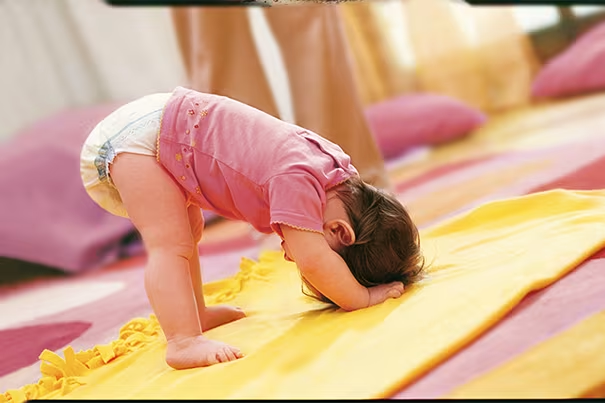
Toddler milestones: developing independence


After your child's first birthday, you may witness a transition from needy newborn to take-charge toddler. Here are some signs that she's ready to try taking care of herself.
Milestone 1: Feeding herself
By 15 months, she may show interest in using a spoon, even grabbing it when you feed her. By 18 months she may be able to handle the spoon pretty well (and get most of the food into her mouth). Keep plenty of paper towels handy – it's about to get messy!
How you can help?
Invest in rubber-tipped spoons so she doesn't hurt her gums. Use unbreakable crockery that can survive multiple tumbles from the high chair to the floor.
**
Milestone 2: Taking her first steps
**Many toddlers take their first steps around their first birthday. Signs that your child is ready include rolling around, scooting and climbing stairs using hands.
How you can help?
Make sure your baby gets plenty of tummy time from early on. Walking requires strong back muscles, which your baby develops when he lies on his tummy and lifts up his head.
Milestone 3: Brushing her teeth
While she won't have the coordination to take over the toothbrush task completely until age six or seven, you can let her practise if she wants to try.
How you can help?
Most dentists encourage parents to let their child brush his teeth on her own, and then to follow up with a thorough cleaning.
It's thrilling to watch your child become more and more independent, but it's important to let her reach milestones at her own pace. Your job? Provide support and show her how it's done.

Is My Child Ready For Nursery School?
Is your child ready to move to nursery school? Find out using our useful guide about the best age to send your child to nursery school.
Read more
Understanding Parallel Play in Toddlers
Unlike older children, toddlers tend to play alongside each other but don’t interact. This is called parallel play. Read about this stage of play development.
Read more
All About Thumb-Sucking
Thumb or finger-sucking is normal in the first few years. Learn why your child sucks his or her thumb and if you should help your little one break the habit.
Read more
10 Tips for Dealing With the Terrible Twos
Discover the meaning behind the term ‘terrible twos’, what causes it and how long it lasts. Plus, get tips for dealing with the tantrums and defiant behaviour.
Read more
Fine Motor Skills in Babies and Toddlers
What are fine motor skills and what activities can help develop your baby or toddler’s hand and finger skills? Read on for all you need to know!
Read more
What Is Pretend Play?
Pretend play is an important developmental stage for toddlers. It enables your child to boost language and social skills through play. Read more about imaginative play.
Read moreIs My Child Ready For Nursery School?
Is your child ready to move to nursery school? Find out using our useful guide about the best age to send your child to nursery school.
Read moreUnderstanding Parallel Play in Toddlers
Unlike older children, toddlers tend to play alongside each other but don’t interact. This is called parallel play. Read about this stage of play development.
Read moreAll About Thumb-Sucking
Thumb or finger-sucking is normal in the first few years. Learn why your child sucks his or her thumb and if you should help your little one break the habit.
Read more10 Tips for Dealing With the Terrible Twos
Discover the meaning behind the term ‘terrible twos’, what causes it and how long it lasts. Plus, get tips for dealing with the tantrums and defiant behaviour.
Read moreFine Motor Skills in Babies and Toddlers
What are fine motor skills and what activities can help develop your baby or toddler’s hand and finger skills? Read on for all you need to know!
Read moreWhat Is Pretend Play?
Pretend play is an important developmental stage for toddlers. It enables your child to boost language and social skills through play. Read more about imaginative play.
Read moreIs My Child Ready For Nursery School?
Is your child ready to move to nursery school? Find out using our useful guide about the best age to send your child to nursery school.
Read moreUnderstanding Parallel Play in Toddlers
Unlike older children, toddlers tend to play alongside each other but don’t interact. This is called parallel play. Read about this stage of play development.
Read moreJoin Pampers Club and get:
- PAMPERS COUPONS
- TOOLS & QUIZZES
- PARENTING TIPS
 PAMPERS COUPONS
 TOOLS & QUIZZES
 PARENTING TIPS