Is My Child Ready For Nursery School?


Key Takeaways
When Will My Child Be Ready for Nursery School?
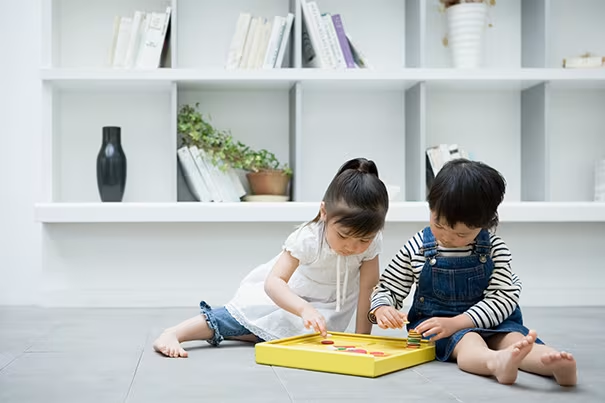
Every child develops at his own pace, so pre-school readiness and social readiness can blossom at different rates. Some children are more than ready at 18 months, while other children need to be three- or four-years-old before they pick up a mini-rucksack or lunch box.
Take the Following into Consideration:
Bottom Line
Every child is different; they mature and develop at different paces. If your child isn't ready for pre-school, wait until he can have a happy, positive experience when goes for the first time.

Understanding Parallel Play in Toddlers
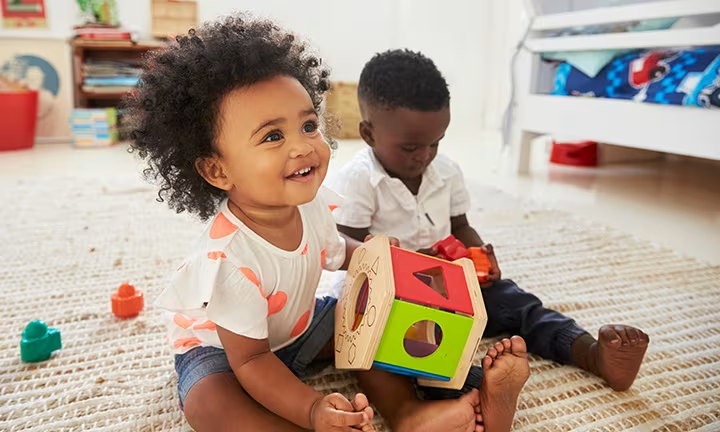
Unlike older children, toddlers tend to play alongside each other but don’t interact. This is called parallel play. Read about this stage of play development.
Read more
All About Thumb-Sucking
Thumb or finger-sucking is normal in the first few years. Learn why your child sucks his or her thumb and if you should help your little one break the habit.
Read more
Toddler milestones: developing independence
Aiding your toddler in gaining independence will both help them in their coming years, as well as reducing any separation anxiety that they may be feeling.
Read more
10 Tips for Dealing With the Terrible Twos
Discover the meaning behind the term ‘terrible twos’, what causes it and how long it lasts. Plus, get tips for dealing with the tantrums and defiant behaviour.
Read more
Fine Motor Skills in Babies and Toddlers
What are fine motor skills and what activities can help develop your baby or toddler’s hand and finger skills? Read on for all you need to know!
Read more
What Is Pretend Play?
Pretend play is an important developmental stage for toddlers. It enables your child to boost language and social skills through play. Read more about imaginative play.
Read moreUnderstanding Parallel Play in Toddlers
Unlike older children, toddlers tend to play alongside each other but don’t interact. This is called parallel play. Read about this stage of play development.
Read moreAll About Thumb-Sucking
Thumb or finger-sucking is normal in the first few years. Learn why your child sucks his or her thumb and if you should help your little one break the habit.
Read moreToddler milestones: developing independence
Aiding your toddler in gaining independence will both help them in their coming years, as well as reducing any separation anxiety that they may be feeling.
Read more10 Tips for Dealing With the Terrible Twos
Discover the meaning behind the term ‘terrible twos’, what causes it and how long it lasts. Plus, get tips for dealing with the tantrums and defiant behaviour.
Read moreFine Motor Skills in Babies and Toddlers
What are fine motor skills and what activities can help develop your baby or toddler’s hand and finger skills? Read on for all you need to know!
Read moreWhat Is Pretend Play?
Pretend play is an important developmental stage for toddlers. It enables your child to boost language and social skills through play. Read more about imaginative play.
Read moreUnderstanding Parallel Play in Toddlers
Unlike older children, toddlers tend to play alongside each other but don’t interact. This is called parallel play. Read about this stage of play development.
Read moreAll About Thumb-Sucking
Thumb or finger-sucking is normal in the first few years. Learn why your child sucks his or her thumb and if you should help your little one break the habit.
Read moreJoin Pampers Club and get:
- PAMPERS COUPONS
- TOOLS & QUIZZES
- PARENTING TIPS
 PAMPERS COUPONS
 TOOLS & QUIZZES
 PARENTING TIPS