Safe Sleeping Guide for Infants
Key Takeaways
Do you put your baby to sleep at night and then worry about their safety? Do you put your ear close to their head to check their breathing? These worries are natural for every parent, and there are many things that you can do to keep your little one safe when they’re sleeping and put your mind at rest, too. Read on to find out more.


Promoting Safe Sleep for Babies
When you put your little one to bed, you want to know that they are going to sleep in a safe, comfortable place. You want to be able to relax too, as looking after a young baby can be a demanding time. Providing an environment that ensures safe sleep for babies is not a complicated or expensive affair – you don’t need to invest in the latest black-out blinds or white noise machine (unless you want to) – but there are a few things that you can do that will really make your baby’s environment a healthier and safer place.
To promote safe sleep for your baby, Smart Sleep Coach offers personalised sleep guidance and resources for parents, ensuring your little one receives quality rest essential for healthy development. The Smart Sleep Coach app makes it easier for parents to establish a consistent bedtime routine, identify and address sleep issues and implement safe sleep practices. To learn more about it and how it can benefit your family, take a look at the Smart Sleep Coach app and embark on a journey towards better sleep for your baby.
About SIDS (Sudden Infant Death Syndrome)

Let’s talk about the main worry – SIDS. Sudden infant death syndrome (also known as cot death) is a huge worry for parents, even though it actually only affects 0.27 percent of babies in the UK. Nobody really knows exactly what causes SIDS, although there are a number of factors that are known to increase the risk. The good news is that most of these factors can be either removed or reduced greatly by following some simple best practices.
There are some countries, namely Japan and the Netherlands, where SIDS is much less common. This has led experts to ask if cultural factors may play a part. One UK study suggested that SIDS could be lower in some cultures because of different attitudes to sleeping in the same room as your baby and lower levels of maternal smoking and drinking. Breastfed babies also fare better, even when the milk is expressed for them.
Another big factor in decreasing cot death is how your baby goes to sleep. This includes their sleeping position, the things they have around them in the cot and the temperature of the room. So although SIDS is still not fully understood, you can do a lot of things that will set your mind at ease when you put your baby down for their nap.
Did you know?
In Finland, some babies sleep in cardboard boxes sent out by the government! They come complete with starter items to help new mothers, and some experts believe these little cardboard cots help promote some of the lowest infant mortality rates.

Pampers® Premium Protection New Baby
The Best Safe Sleeping Position
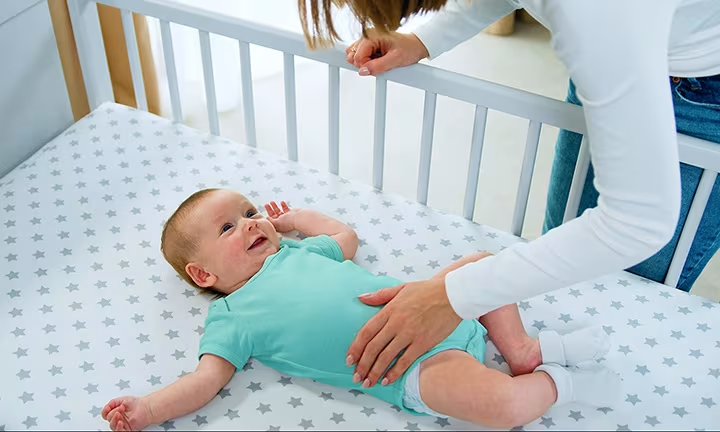
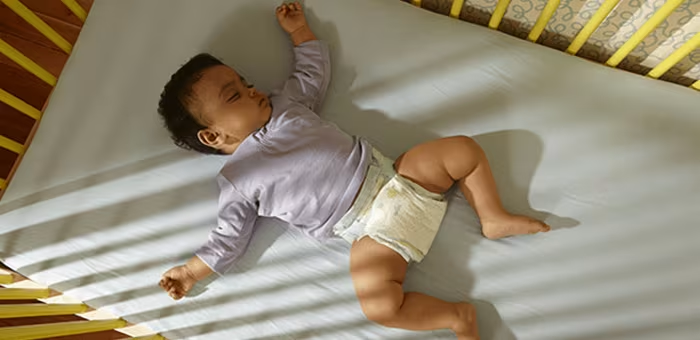
To ensure a good, safe sleep for babies, the position that you lay them down in can make all the difference. Research suggests that it is not safe to lay your baby down on their tummy. The best position for a baby to sleep is on their back. This prevents their airways from becoming blocked and reduces the risk of them being suffocated. Even if you lay your little one on their side, they could roll back onto their stomach.
An older, more active baby will be able to roll themselves around and choose their own sleeping position, but for newborns, on their back is best. If you find that your younger baby has rolled onto their tummy, gently place them on their back again.
Feet to foot – where baby’s feet are at the bottom of their cot – will also help as it stops your child from wriggling down under the covers during sleep. If your little one is already at the bottom of the cot when you put them to bed, there aren’t many other places that they can go and the covers are more likely to stay where you want them – keeping your baby warm.
Other places where your little one can safely sleep:
Pushchairs and car seats, while okay for short journeys, are not the best places for safe sleeping. As soon as you can, transfer your baby from their stroller or seat and put them to bed in their cot. A pram with a flat, firm mattress is also okay.
Help! Safe Sleeping Has Given My Baby a Flat Head
You might notice that your little one seems to have a flat head at the back – and this can be due to them spending a lot of time lying on their back. The medical term is ‘brachycephaly’ and it can look quite odd! But don’t worry: babies have soft skulls and having a flattened head is not a risk to their brain. Stick with the advice for safe sleep for babies and keep your baby on their back until they are ready to roll over themselves. You can help things by giving them tummy time during the day, taking the pressure off the back of their head. A flat head should not be a cause for concern unless your baby is struggling to turn their head, in which case, speak to your health visitor or GP and get them to have a look.
In summary
Your baby should always go to sleep on their back until they reach an age where they are mobile enough to wriggle around and choose their own sleeping position. It is good practice to put your little one’s feet to the foot of their cot – this stops them from wriggling under the bedclothes. And don’t worry too much about that flat head! Plenty of tummy time will help until they’re ready to roll over themselves.

FAQS AT A GLANCE
Lay your baby on their back in their cot. Do not use a duvet, cot bumpers or things that could fall and cover their head. Regulate the room temperature and place your baby’s feet to the foot of the cot.

The Bottom Line
There are lots of things that you can do to promote safe sleeping habits for your young baby. While every parent will worry to some degree about their baby while they are asleep, following some simple safe sleep guidelines can take much of that worry away. Sudden infant death syndrome is scary, but it is much rarer than you may think and you can make it even less of a possibility by providing a cot free of clutter in a room with an even temperature. Putting your little one to sleep on their back is the best thing that you can do to ensure a safe sleep. If you’re breastfeeding, it’s good to know that this also reduces the risk of SIDS. If you follow these few guidelines, they might just put your mind at rest – although you will probably still want to take a peek at your beautiful baby while they’re sleeping!