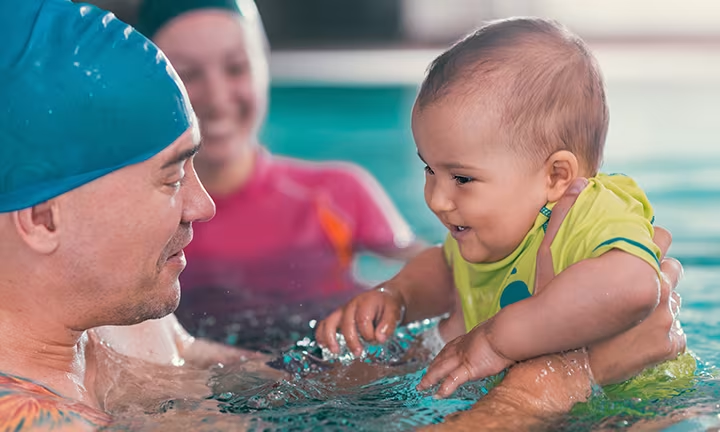
Baby Swimming: When and How to Get Started


Children often love being around water and while learning how to swim and float are important skills, simply splashing away in the pool is also a lot of fun for your child. If you’ve been considering baby swimming lessons and are wondering at what age your baby can start swimming, what the benefits of teaching your baby or toddler to swim are and how to prepare for your baby’s first swim you’ve come to the right place!
It’s never too early or too late to start growing your little one’s confidence in and around water, so read on to discover everything you need to know about taking your baby swimming.

When Can Babies Go Swimming for the First Time?
You might be surprised to learn that there is no minimum recommended age for taking your baby to the swimming pool. That’s right, even newborns can start learning to swim.
However, although it’s theoretically possible to start teaching newborn babies to swim from birth, it’s more common for baby swimming lessons to be offered from 3 months old or a bit later.
There’s no need to rush if you feel your infant isn’t ready yet. As a rough guide, you can usually take your baby swimming when he or she feels more or less comfortable and at home in water.
Playful, splashy bath times are a great way to help your little one get acquainted with the water before venturing out for you and your baby’s first ‘swim’ together.
It’s not recommended to just jump into the pool with your baby though. Professionally supervised adult and child sessions are the safest way to help your infant get used to being in the water with you and other people. At these sessions, you’ll also learn how to safely support your baby in the water.
To be on the safe side, always check with your health visitor before taking the plunge and signing up for baby swimming lessons, and remember to never leave your baby unsupervised in or near water whether it’s the bath at home or the pool at your local aquatics centre.
Is it Good for Babies to Swim?
Yes! If you and your baby enjoy the experience of being in water, there are plenty of great reasons to take your baby swimming:
How Do You Choose the Right Baby Swimming Lessons?
Good professional supervision is essential, both for safety reasons and to help ensure a positive and enjoyable baby swimming experience for you and your budding mermaid or merman.
To be sure, choose baby swimming lessons run by an instructor who’s been specifically trained to teach babies and toddlers, with a nationally recognised qualification.
The swimming school should also ensure that a trained lifesaver and first-aid provider is available throughout the infant swimming lessons.
Young babies aren’t as good at regulating their own body temperature as older children and adults, so the temperature of the pool is important:
Ask your local aquatics centre if they offer parent-child swimming lessons, or ask your health visitor for advice on where to find classes in your area.
What Happens at Baby Swimming Lessons?
At baby swimming lessons a specially trained instructor will use games, songs and other fun activities to help your baby build up confidence and feel comfortable moving around and floating in the water.
You (and/or your partner) will be in the pool as well, to support your baby and share in the aquatic fun. Don’t worry if you aren’t a great swimmer yourself. You won’t need to do any actual swimming – you’ll be there to hold and reassure your little one.
As the weeks and months go by and your child becomes more capable, he or she will gradually be introduced to basic aquatic skills such as floating and moving in the water and getting in and out of the pool safely.
For a more specific idea of what will happen at each lesson, don’t be afraid to ask the instructor for this kind of information. He or she will be able to give you a rough idea of how water skills are taught and built up over time.
What Does a Baby Need for Swimming?
If your baby isn’t potty or toilet-trained, you’ll need to take a swimming nappy.
You may be asked to use a double nappy system for baby swimming lessons. This consists of a reusable or disposable swimming nappy and a neoprene nappy worn over the top of this, with snug fitting waist and leg cuffs.
Each swimming school and pool may have different requirements, so it’s always best to check in advance what you need to bring and what’s provided by the school. Here are some of the essentials you might need to take with you when you take your baby swimming:
The Bottom Line
It’s never too early to start helping your little one feel at home in water. Baby swimming is a great way of giving your infant the confidence and basic aquatic skills he or she needs to become a capable swimmer one day.
Baby swimming may also be beneficial for your child’s health and development. Most importantly, though – with help and supervision from a trained professional – splashing about in the pool with your baby can simply be a whole lot of fun!

How to take professional-looking baby photos
Taking professional-looking baby photos can be done easily by using some of these helpful tips. Find out the best methods of taking photos of babies.
Read more
Teaching baby to love reading: tips
Delve into our comprehensive baby reading guide. Uncover captivating methods on how to teach your baby to read, nurturing an early love for literature.
Read more
How Much Screen Time Is Too Much?
Can babies watch tv? Unravel myths and learn the guidelines about the right screen time for babies to ensure your child's healthy growth.
Read more
27 Nursery Rhymes and Songs for Babies, Toddlers and Children
Explore 27 beloved nursery rhymes and songs that comfort, teach and connect, helping babies build language, rhythm and joyful memories with you.
Read more
Indoor Activities for Babies, Toddlers and Pre-schoolers
Looking for indoor activities you can do at home with your baby or toddler? Check out these great play ideas.
Read more
Working from home while caring for your baby or toddler
Juggling working from home while also caring for your child can be overwhelming, but with these tips and useful schedule example it can be easier.
Read more
Eating out: dining with baby in a restaurant
When bringing your baby to your favourite restaurant you need to be prepared, to ensure that both your and other people's evening out goes to plan.
Read moreHow to take professional-looking baby photos
Taking professional-looking baby photos can be done easily by using some of these helpful tips. Find out the best methods of taking photos of babies.
Read moreTeaching baby to love reading: tips
Delve into our comprehensive baby reading guide. Uncover captivating methods on how to teach your baby to read, nurturing an early love for literature.
Read moreHow Much Screen Time Is Too Much?
Can babies watch tv? Unravel myths and learn the guidelines about the right screen time for babies to ensure your child's healthy growth.
Read more27 Nursery Rhymes and Songs for Babies, Toddlers and Children
Explore 27 beloved nursery rhymes and songs that comfort, teach and connect, helping babies build language, rhythm and joyful memories with you.
Read moreIndoor Activities for Babies, Toddlers and Pre-schoolers
Looking for indoor activities you can do at home with your baby or toddler? Check out these great play ideas.
Read moreWorking from home while caring for your baby or toddler
Juggling working from home while also caring for your child can be overwhelming, but with these tips and useful schedule example it can be easier.
Read moreEating out: dining with baby in a restaurant
When bringing your baby to your favourite restaurant you need to be prepared, to ensure that both your and other people's evening out goes to plan.
Read moreHow to take professional-looking baby photos
Taking professional-looking baby photos can be done easily by using some of these helpful tips. Find out the best methods of taking photos of babies.
Read more