Skip to main contentSkip to search
A316

Health review: 3-year-old check-up

2 min readUpdated November 21, 2025

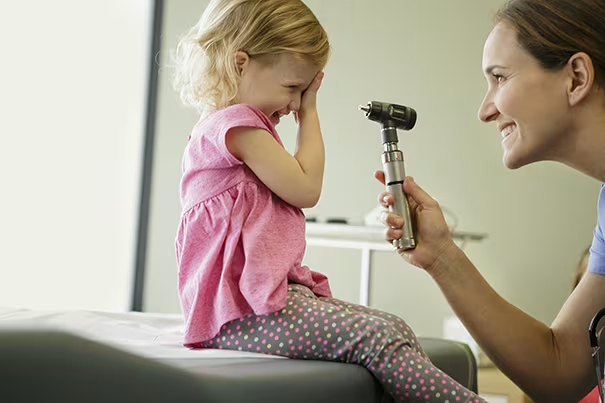
Three-year-olds are great fun to bring in for a check-up. They're so curious about what's going on and eager to cooperate. They love to report their name and age and tell the doctor or nurse about their life. They're also interested in their bodies, and aren't as defensive about them as many two-year-olds are. Try not to come in at nap time or on a completely empty tummy; no one will get the best out of the experience.

Key Takeaways

  • An important milestone. The 3‑year review marks a key opportunity to check how your child is growing and developing. Try to book it at a time when they’re well‑fed and rested. 

  • What the check‑up covers. Expect measurements of height, weight and likely blood pressure, along with hearing and vision screening, motor skills and communication tests (often via a drawing or other activity). 

  • Be ready to share. Your health visitor or GP will ask about your child’s behaviour, sleep, toilet‑training, diet, social interactions and any developmental concerns. 

  • Raise any red flags. If you’ve noticed delayed speech, difficulty interacting with peers or other unusual behaviour, mention it – early conversations can guide timely support. 

  • Talk readiness and change. This appointment is a good chance to discuss preschool readiness, any household changes, and ask about any resources or

At this visit, your provider will probably:

  • Weigh and measure your toddler.

  • Check his blood pressure

  • Ask him some questions and give him instructions. Don't try to help your child – the provider is interested in his response. Stay in the room and near him as reassurance, but see how much he can handle on his own.

  • Your provider will test your child's vision and hearing (until now, your baby probably has had eye and ear tests only if you or your provider suspected a problem). Let your provider know if there is a family history of early vision or hearing problems.

  • Some providers check urine samples. Let your provider know if urinating is painful for your child, if he dribbles or can't hold his urine, or if he's gone back to wetting after being toilet-trained.

  • Your child may also be asked to make a drawing, which provides helpful information about your child's development and well-being. You may want to bring in some of his creations from home, too.

Your provider will want to know:

  • If your baby seen another healthcare provider since the last visit? If so, why? What was the outcome of that visit, and was any medication or treatment prescribed?

  • Does your baby jump, kick a ball or ride a tricycle or other toddler-style three-wheel bike?

  • Does he know his name?

  • Can he play well with other children?

  • Have his tantrums increased?

Talk it over

  • If your child is in day-care or pre-school, the teachers there may have mentioned concerns. Talk these over with your provider.

  • If your child hasn't been in day-care or pre-school yet and you're considering enrolling him, your provider may be able to give you some guidance on finding a good one.

  • If grandparents or other relatives have mentioned any concerns about your child, discuss them with your provider.

  • Let your provider know if your child seems to be having problems eating or sleeping. If he snores or coughs at night, ask what to do about it.

  • Tell your provider if you are on a special diet, such as vegetarian or low cholesterol. Your provider can help you ensure that your growing child and the whole family get the proper nutrition.

  • Discuss where he's at with toilet-training. Mention if there has been any back-sliding on this issue. You may need some guidance.

  • If you're having trouble with discipline, discuss it now.

Speak up!

The following items are of special concern, so be certain to tell your healthcare provider if your child:

  • Isn't speaking in real sentences or asking questions using the 'w' words (who, what, where, when and why).

  • Isn't following stories or showing any interest in books.

  • Always stands too close to the TV or likes the volume turned up high.

  • Squints.

  • Has a lot of difficulty separating from you.

  • Isn't really interacting with other kids in a group setting.

  • Isn't happy most of the time.

  • Doesn't know his name and age.

Also be sure to mention:

  • If a household member or someone who has frequent contact with your child has tuberculosis, hepatitis or another serious infectious disease. Your child may need testing or treatment.

  • If there's been an outbreak of diarrhoea or any contagious disease in his school or day-care centre, or at your office. Your child may need special tests or vaccines.

  • If there has been any major change in your family or circumstances.

  • If you have no health insurance for your child.

Finally, a baby check-up at three years is an opportunity for you to discuss any concerns with your provider and make sure that your child is on the right track of his development. So take the opportunity!


Related Articles

See more articles
See more articles
Slide 1 of 6
Tummy Aches in Children
Health11 min read

Stomach Pain in Children: Toddler Tummy Aches

Check out quick tips to understand what commonly causes tummy aches for toddlers, and some simple remedies and activities to help stop abdominal pain.

Read more

Close-up of a newborn lying on a blanket with eyes closed and mouth open mid-sneeze, wearing a striped outfit and raising their arms
Health8 min read

Frequent Sneezing in Newborns & Babies

Newborns sneezing a lot might seem strange; however, it's perfectly normal. Read more about why your baby may be sneezing a lot.

Read more

hives on baby
Health8 min read

Hives on Babies - What You Need To Know

Understanding baby hives is crucial for every parent. Dive deep into our comprehensive guide and learn about symptoms and much more about hives in babies.

Read more

Two-year-old child at a routine doctor's appointment
Health4 min read

Health Review: 2 to 2.5 Years Check-up

Prepare your 2-year-old's check-up with this guide that includes an NHS-endorsed questionnaire. Evaluate their health and developmental progress.

Read more

Diabetes in infants
Health12 min read

Diabetes in Children

Learn about type 1 and type 2 diabetes in toddlers and children, how to recognise the warning signs, and how diabetes can be diagnosed and treated.

Read more

Warts on Kids
Health6 min read

All About Warts and Verrucas on Children

Warts on children are common and harmless, although some may be painful. Find out what causes warts and what wart treatments are available for kids.

Read more
Tummy Aches in Children
Health11 min read

Stomach Pain in Children: Toddler Tummy Aches

Check out quick tips to understand what commonly causes tummy aches for toddlers, and some simple remedies and activities to help stop abdominal pain.

Read more
Close-up of a newborn lying on a blanket with eyes closed and mouth open mid-sneeze, wearing a striped outfit and raising their arms
Health8 min read

Frequent Sneezing in Newborns & Babies

Newborns sneezing a lot might seem strange; however, it's perfectly normal. Read more about why your baby may be sneezing a lot.

Read more
hives on baby
Health8 min read

Hives on Babies - What You Need To Know

Understanding baby hives is crucial for every parent. Dive deep into our comprehensive guide and learn about symptoms and much more about hives in babies.

Read more
Two-year-old child at a routine doctor's appointment
Health4 min read

Health Review: 2 to 2.5 Years Check-up

Prepare your 2-year-old's check-up with this guide that includes an NHS-endorsed questionnaire. Evaluate their health and developmental progress.

Read more
Diabetes in infants
Health12 min read

Diabetes in Children

Learn about type 1 and type 2 diabetes in toddlers and children, how to recognise the warning signs, and how diabetes can be diagnosed and treated.

Read more
Warts on Kids
Health6 min read

All About Warts and Verrucas on Children

Warts on children are common and harmless, although some may be painful. Find out what causes warts and what wart treatments are available for kids.

Read more
Tummy Aches in Children
Health11 min read

Stomach Pain in Children: Toddler Tummy Aches

Check out quick tips to understand what commonly causes tummy aches for toddlers, and some simple remedies and activities to help stop abdominal pain.

Read more
Close-up of a newborn lying on a blanket with eyes closed and mouth open mid-sneeze, wearing a striped outfit and raising their arms
Health8 min read

Frequent Sneezing in Newborns & Babies

Newborns sneezing a lot might seem strange; however, it's perfectly normal. Read more about why your baby may be sneezing a lot.

Read more