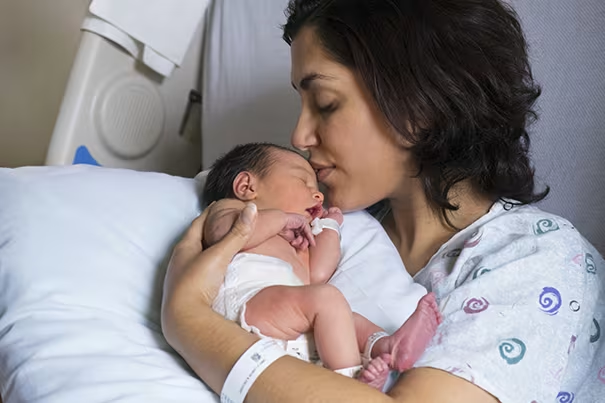
Newborn baby development: understanding baby


Welcome to parenthood! Although it all may seem overwhelming, your baby is less frail and helpless than you might think. They are capable in many ways and are going to help you become a good parent by giving you signals about what they need.

Your baby's major needs
At the moment, your baby's primary needs include feeding, sleeping and being soothed. They are learning that the world is a place to be trusted to meet their needs. Babies, like adults, come with individual temperaments. Some babies have more regular eating and sleeping patterns than others do at this age. It's best to adapt to your baby's schedule. He still needs to eat pretty regularly throughout the 24-hour day. Understandably, parents are exhausted and wondering whether they'll ever have a moment to themselves again. Rest assured, you will. For now, give in to the changes that your baby demands.
Spend your time taking care of your baby and yourself and getting to know each other
Remember to help yourself by keeping visitors who aren't helpers to a minimum, and don't worry about household tasks.
3 weeks
By three weeks, you may have developed some kind of rhythm or pattern of sleeping and eating, and you'll surprise yourself by starting to anticipate what your baby needs.
Your baby now:
2 Months
Your baby still keeps you guessing, but their sleeping and eating habits are becoming a bit more predictable. As your child gets over their bouts of cradle cap and other common newborn conditions, they'll look more and more like a model baby. They'll act the part with smiles, lots of 'conversation' and delighted wiggles when they see you. You may also notice that your baby:
Fussing and crying tend to increase later in the day, which can be stressful. Ask your partner or someone you trust to help out. Carrying your baby in a baby carrier, even when they are not fussing, can reduce the amount of crying overall.
Now's the time to start watching your baby's eyes to see what their real colour will be. Your baby may also be noticeably chubbier by two months, and he may even have a double chin and thigh folds. This is the hallmark of a healthy, well-fed baby. It's time for his two-month check-up, so get ready to show him off at the GP's office.

Read more about Newborn Baby
Baby Growth Chart: How to Track Your Baby’s Growth From Birth to 24 Months
Find out how to read baby growth charts and support your child’s development—get simple tips and must-know info in our full guide.
Read more
When Do Babies’ Eyes Change Colour?
Your baby’s eye colour can change after birth; learn why, what colour your baby may end up with, and how genetics influence the final eye colour.
Read more
When, What and How Far Can Newborns See?
From the very beginning, babies use their eyes to start discovering what’s around them! Here’s a look at when and how far newborns can see, when they first recognise colours, and what to expect next.
Read more
When Do Babies Start Cooing?
Cooing sounds are the first sounds babies make, at around six to eight weeks. Learn more about your baby's first sounds.
Read more
Your Baby's First Laugh
Babies usually start laughing at 4 months. Read on to read more about when and why babies start laughing.
Read more
When Do Babies Start Smiling?
Wondering when your baby will start to smile? Find out more about this development milestone, and what you can do to encourage that first smile.
Read more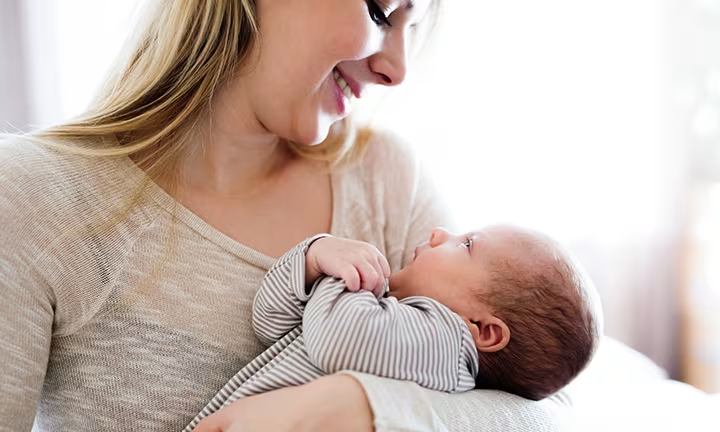
When Can Babies Hold Their Head Up?
Learn about when do babies hold their heads up and the progression towards this major developmental milestone, usually achieved by the fourth month.
Read more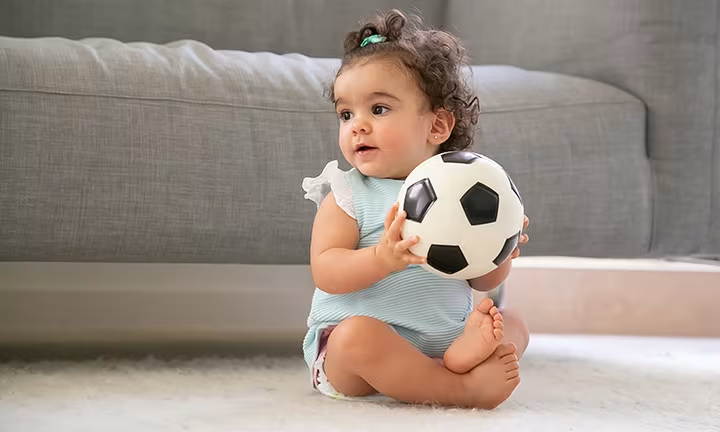
Gross Motor Skills Development in Babies and Toddlers
What are gross motor skills? They include large movements such as sitting and walking. Read more about these abilities per age.
Read more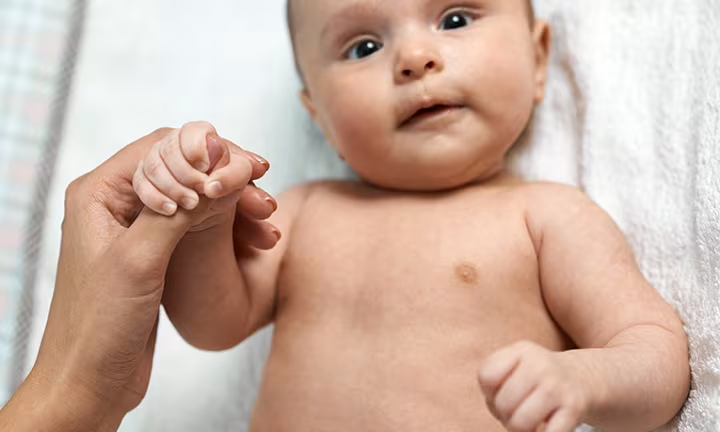
Baby Reflexes Explained
Dive into the world of newborn reflexes. Discover the responses to stimuli, like the startle and grasp reflex, and learn about your baby's development.
Read moreBaby Growth Chart: How to Track Your Baby’s Growth From Birth to 24 Months
Find out how to read baby growth charts and support your child’s development—get simple tips and must-know info in our full guide.
Read moreWhen Do Babies’ Eyes Change Colour?
Your baby’s eye colour can change after birth; learn why, what colour your baby may end up with, and how genetics influence the final eye colour.
Read moreWhen, What and How Far Can Newborns See?
From the very beginning, babies use their eyes to start discovering what’s around them! Here’s a look at when and how far newborns can see, when they first recognise colours, and what to expect next.
Read moreWhen Do Babies Start Cooing?
Cooing sounds are the first sounds babies make, at around six to eight weeks. Learn more about your baby's first sounds.
Read moreYour Baby's First Laugh
Babies usually start laughing at 4 months. Read on to read more about when and why babies start laughing.
Read moreWhen Do Babies Start Smiling?
Wondering when your baby will start to smile? Find out more about this development milestone, and what you can do to encourage that first smile.
Read moreWhen Can Babies Hold Their Head Up?
Learn about when do babies hold their heads up and the progression towards this major developmental milestone, usually achieved by the fourth month.
Read moreGross Motor Skills Development in Babies and Toddlers
What are gross motor skills? They include large movements such as sitting and walking. Read more about these abilities per age.
Read moreJoin Pampers Club and get:
- PAMPERS COUPONS
- TOOLS & QUIZZES
- PARENTING TIPS
 PAMPERS COUPONS
 TOOLS & QUIZZES
 PARENTING TIPS