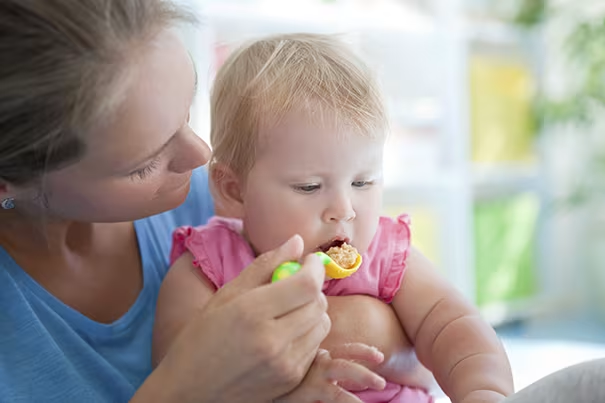

Sitting down to eat a family meal everyday provides the opportunity for children to follow daily routines as well as family routines and imitate the manners observed and taught to them. Whether it is the simple use of thank you when given their plate, or washing their hands before sitting at the dinner table, not talking with their mouth full or holding their knife and fork properly. Mealtimes are one of the best opportunities for you to act as a role model to empower your child to learn about manners. They are one of the key focal points of the day and are times when your child can sit with his parents and join in the conversation. Daily routines and family routines are an important part of every child’s day.
Let’s Lay The Table Together:
By Annette Karmiloff-Smith
Your child will enjoy the responsibility of laying the table, and it will help him understand the purpose of each different piece of cutlery and even develop his number skills as he learns to distribute knives, forks and spoons to the right people.
As you lay the table together, take him through the cutlery so that he understands where to put each item and talk through why a knife has a serrated edge and how it can work in combination with your fork to hold and slice your food. Once you have finished, play a game by mixing everything up and see if he can lay it again all on his own.
Can You Eat the Same Way as Mummy and Daddy?
By Annette Karmiloff-Smith
As adults, we know instinctively that it is impolite to spit out our food or eat with our mouths open. However, these are all manners that our children have yet to learn, especially in advance of social situations where they need to be well-behaved in front of others. Here are some tips to help your child learn how to eat his food:
Wait until everyone is sat at the table before your child starts their meal.
Ask your child to sit up nice and straight. It’s not only polite; it will also help his digestion.
Put your child’s plate on a mat to encourage him to keep his plate in one place and in easy reaching distance
Use the right size child cutlery so that it’s easy to handle. One day, he’ll announce he wants big ones, so be ready for renewed mess!
Encourage your child to put his cutlery back on his plate in between mouthfuls so that it’s not waving in the air, and to put them lined up together to show he has finished
When your child first starts using cutlery, chop up his baby food in small pieces until he’s grasped the scooping up motion. Once he’s become more accomplished, show him how to cut up his baby food and into manageable sizes so that he doesn’t bite off more than he can chew.
Help motivate your child to take an interest in his baby food by asking him to describe what’s on his plate and what it tastes like. Ask him what other foods taste similar, to develop his categorization skills.
Ask your child to stay seated at the table until everyone has finished their meal. Then he can ask to get down. Eating meals together form an important element of daily routines and family routines.